Rei Kawakubo has never been interested in making things look the way they are supposed to look, and that refusal made Comme des Garçons one of the most radical names in fashion.
Born in Tokyo in October 1942, Kawakubo studied art and literature at Keio University and never trained as a designer. Self-taught, she founded Comme des Garçons in 1969, selling clothes to stores in Tokyo. The name, “like boys,” pointed to her aim: clothes for women that were made for movement and comfort, not for display.
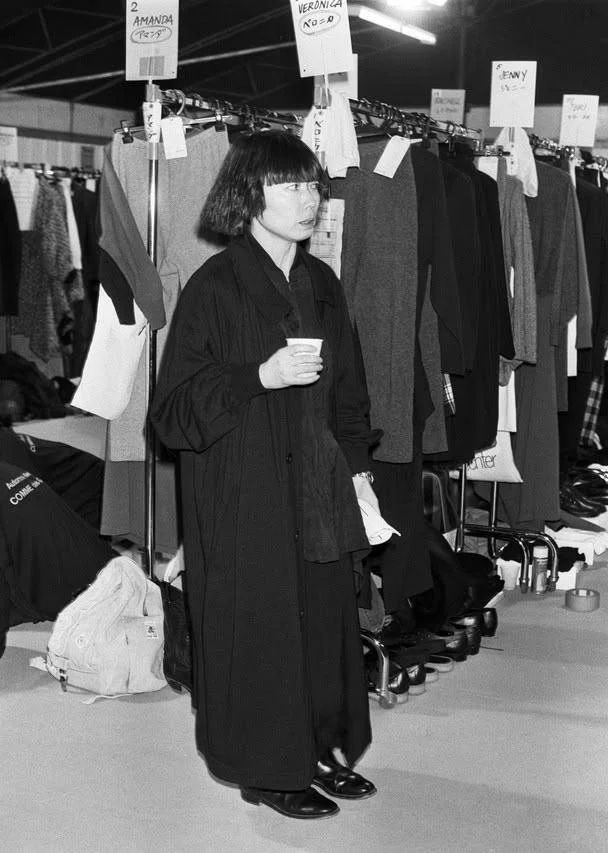
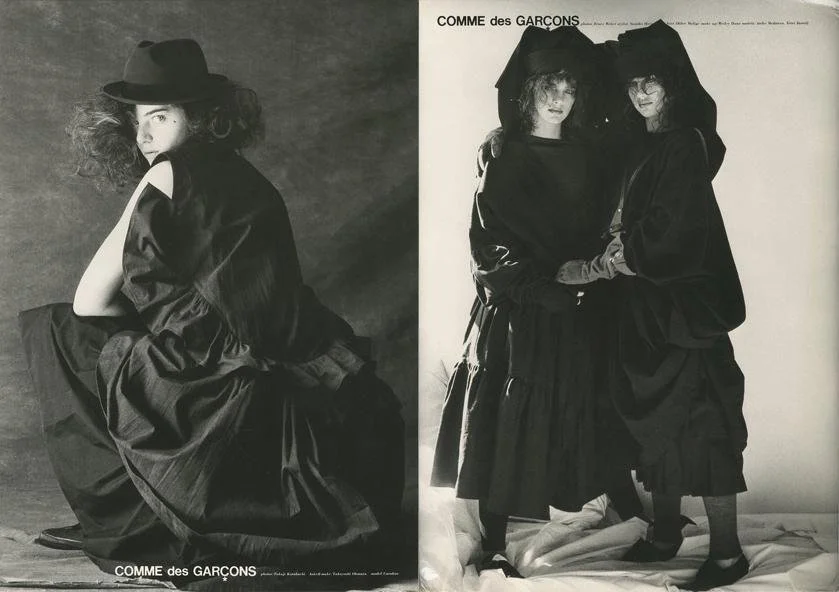
Kawakubo said high fashion has to have a mystery about it. Her approach is strongly inspired by the contemporary art world, which explains her choice of collaborators. In 1980 she asked Peter Lindbergh to shoot a Comme des Garçons campaign, one of his earliest commercial jobs, and in 1994 she gave the artist Cindy Sherman complete freedom to photograph her clothes.
Her first show took place in Tokyo in 1975, followed by Paris in 1980, where her deconstructed silhouettes unsettled the fashion establishment.
Institutional recognition followed. In 1986 the Centre Pompidou presented Mode et Photo, Comme des Garçons, and in 2017 the Metropolitan Museum of Art in New York devoted a major exhibition to her, Rei Kawakubo/Comme des Garçons: Art of the In-Between.
Comme des Garçons Furniture
For Kawakubo, a garment never existed on its own. The spaces where it was shown and sold were part of the same vision: stark, white, almost empty rooms where clothes appeared as objects to be discovered rather than products to be pushed.
It was a natural next step, in 1983, for her to design furniture and objects that seemed to come from the same creative world as her clothes. She applied the same principles: reduce, distort, unsettle. A steel armchair with a woven metal mesh seat looks severe and almost architectural, its frame reduced to straight lines. A chair with a slim tubular back rises from a spiral of steel rings that coil around its legs, turning a functional base into a graphic gesture.
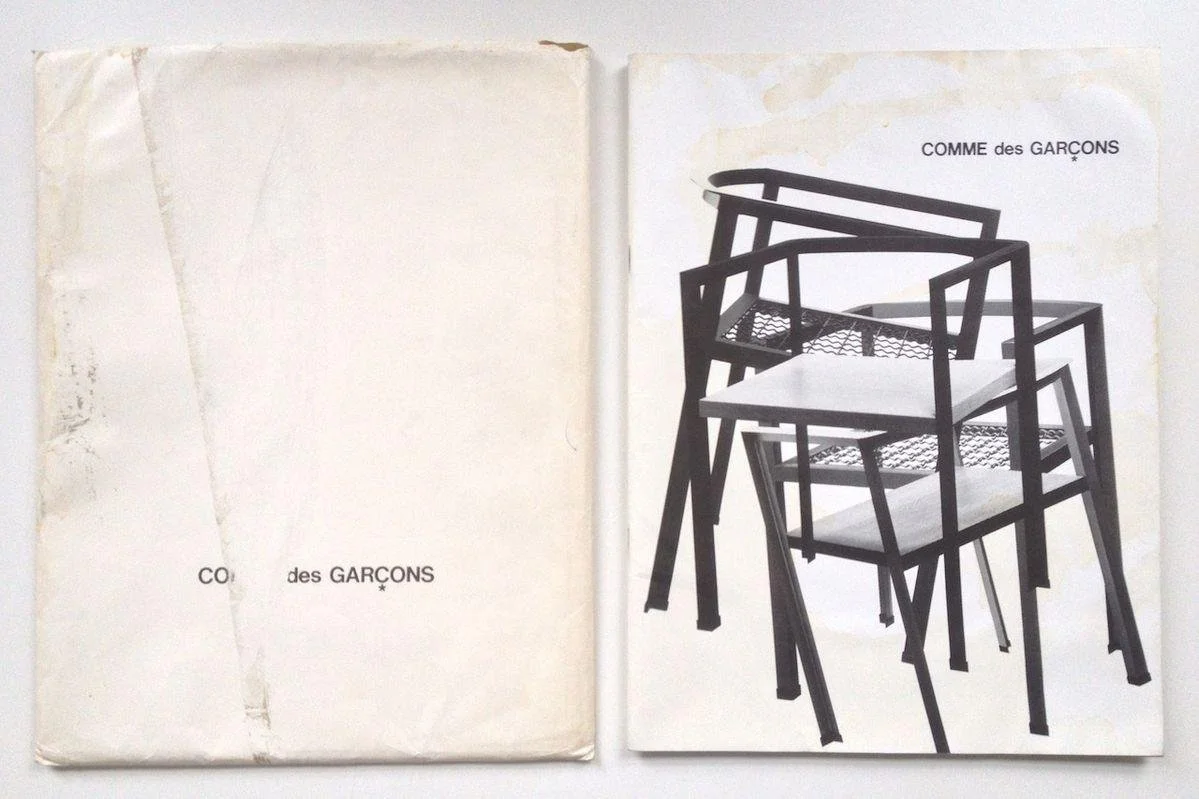
In the original catalogues, these pieces were shown next to images of shattered glass, a reminder that the purpose was never comfort or decoration, but the creative extension of her design based on tension and rupture.
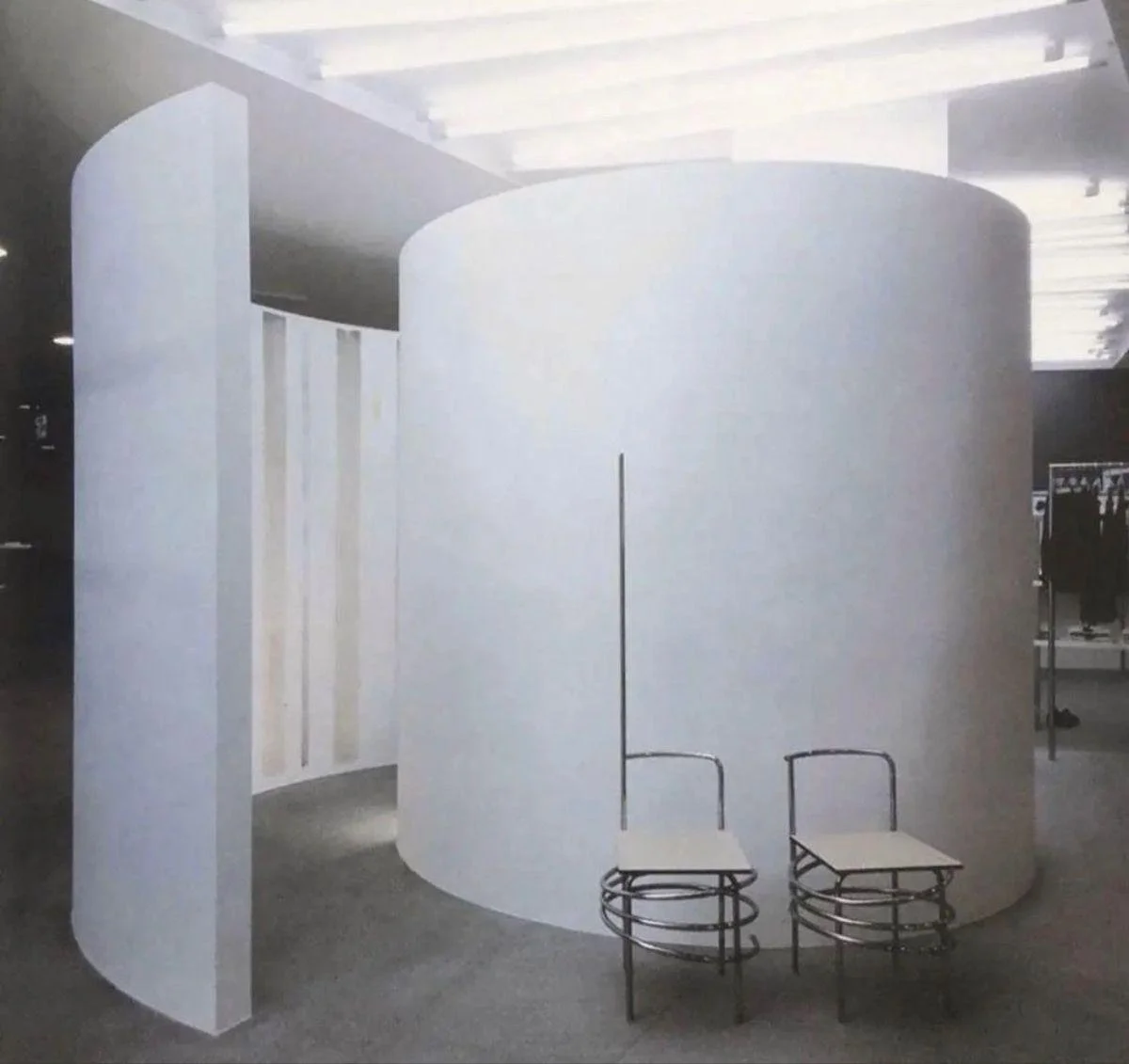
At the end of the 1980s, Comme des Garçons opened a store dedicated to furniture on Place du Marché Saint-Honoré in Paris. There, chairs stood against curved white walls like sculptures, bringing the brand’s language into the realm of the interior.
From boutique to collectible design
Produced in small numbers and long overshadowed by the fashion, the furniture has since found a new audience among collectors. In 2017, Galerie A1043 in Paris presented fifteen pieces. In 2018, Galleria Maniera showed the furniture at Collectible in Brussels, and in 2019 a chair sold at Wright for $18,750.
These pieces matter today because they show that Kawakubo’s vision was never limited to fashion.
Her furniture is a manifesto: a refusal of the expected, extended from the body to the room.