London Design Festival: A Review
London Design Festival is back, and to clarify I mean product design, apologies to my fashion people, but my expertise lies with objects. It was a wonderful opportunity to discover what London has to say about design for the year, and it was right on my doorstep. Milan design week is known for Salone Del Mobile and the luxury fashion houses. But in London - design gets real.
Of course, there are still the major companies present, but in London the highlights of the week were not the fashion houses or the conglomerates, but the young designers who are shaping the future of design. In London you also face the truth, with critical design highlighting the risks of an accelerating industry.
London is the realist; Milan is the idealist.
This week I got to see how the emerging designers are shaping this city and how design has adapted to a world with complex environmental and social problems. Young designers are using sustainability, craft and wit to challenge traditional ideas and to create beautiful products.
In an interview with Dezeen famous furniture designer, Philippe Starck says that there are no longer “star” designers, which is a term that emerged in the 90s and 2000s when the design industry was booming with new architects and designers that were re-shaping the world. He said that he hopes “young designers… are very ecologically concerned, politically concerned” but they will struggle to make a living and risk their work with the emergence of AI, therefore “I cannot say today it's a good job for young people”. Starck’s era was at a time where designers profited highly from market-led design and the focus was on acceleration and production. This era led to the environmental damage that we are now facing from the overproduction of products. We are now at a time when we cannot work like these designers. We need to slow down and rethink how we make our products from the materials to the life span of our work, and its effect on our planet.
Emerging designers are adaptable in every way with ambition and creativity. Starck’s statement on turning away from design as a job feels redundant, and it feels like a way of giving up on design instead of using it as a platform to pursue future solutions.
We actively need more emerging designers to help shape the future of design to adapt to the issues which the designers of Starck’s era didn’t even consider. After this London Design Festival, I can proudly say that the young designers in London are working with sustainability and care to craft, while creating truly beautiful products that consider the complex problems that we face.
This piece will highlight the most exciting shows from London design week which featured emerging designers and studios and how they are navigating and reimagining design for the future.
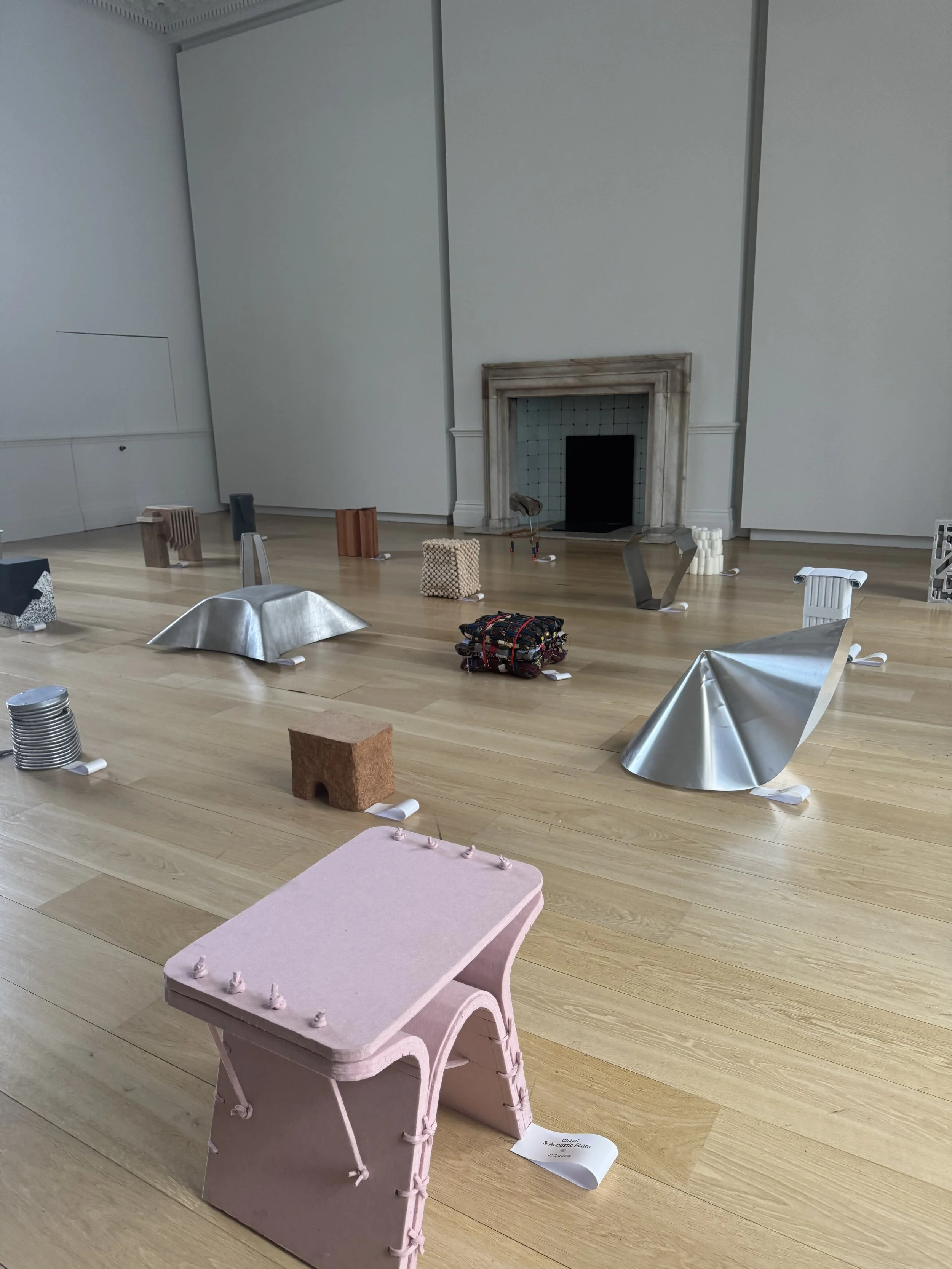
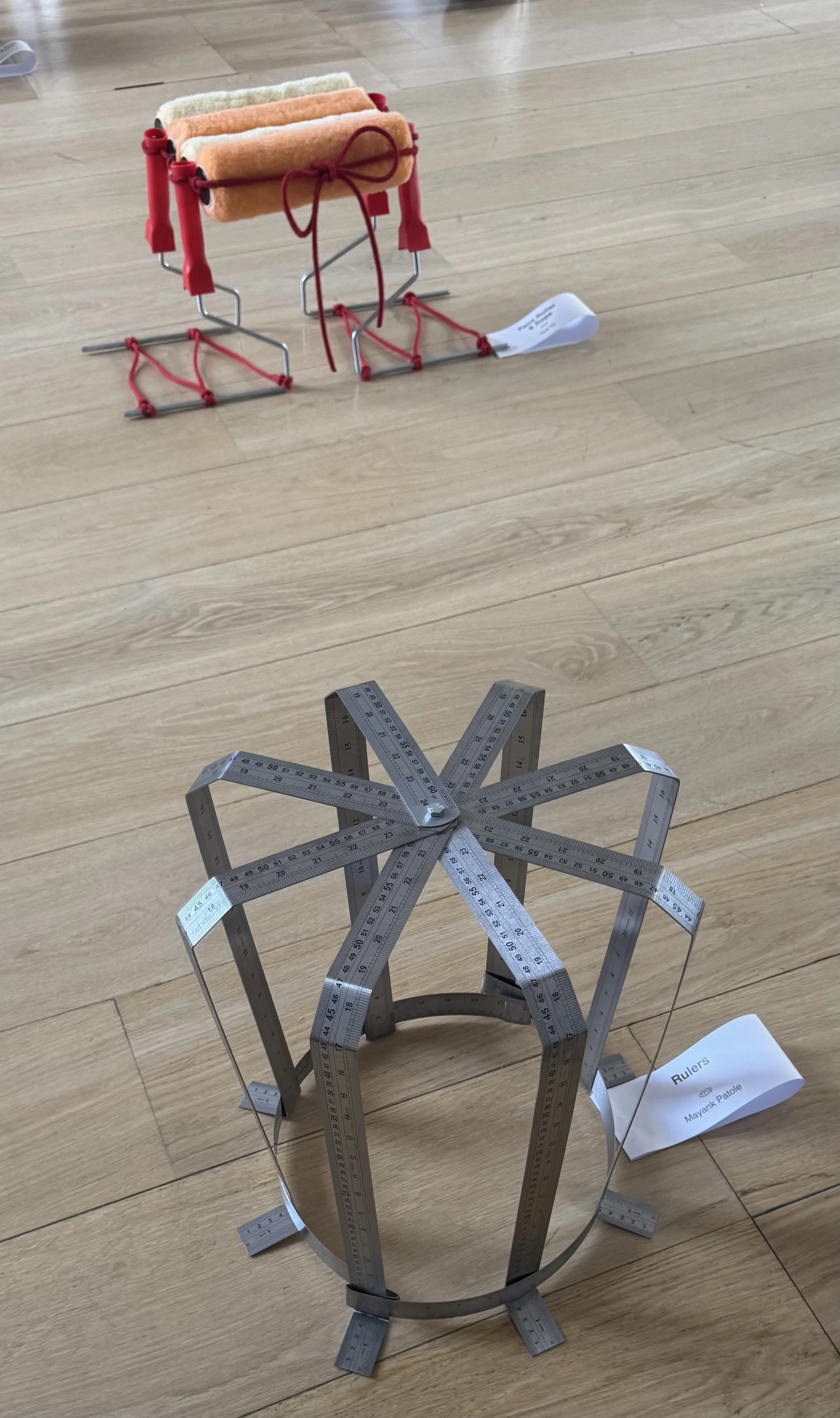
At Brompton Design District curated by Alex Tieghi-Walker, with the theme titled Perfectly Imperfect, master’s students from the Royal College of Art exhibited One Tool, One Stool. Each student had to create a stool using one tool to display how furniture can be produced from the bare minimum and items that we already have. You step into the room, and you can walk through the labyrinth of twenty-three small stools each with its own character and story.
My favourites were: a stool made from steel rulers, a stool made from candles, a stool made from paint rollers, a stool made from acoustic foam and a stool made from a metal tube hose that you find in the shower. The challenge is part of the course at the RCA and every year new inventive ways emerge to reimagine common items into a stool. As a designer this opened my mind to the possibilities of transforming basic materials into new products and this is proof that new designers have the adaptability and skill to create beautiful yet resourceful designs.
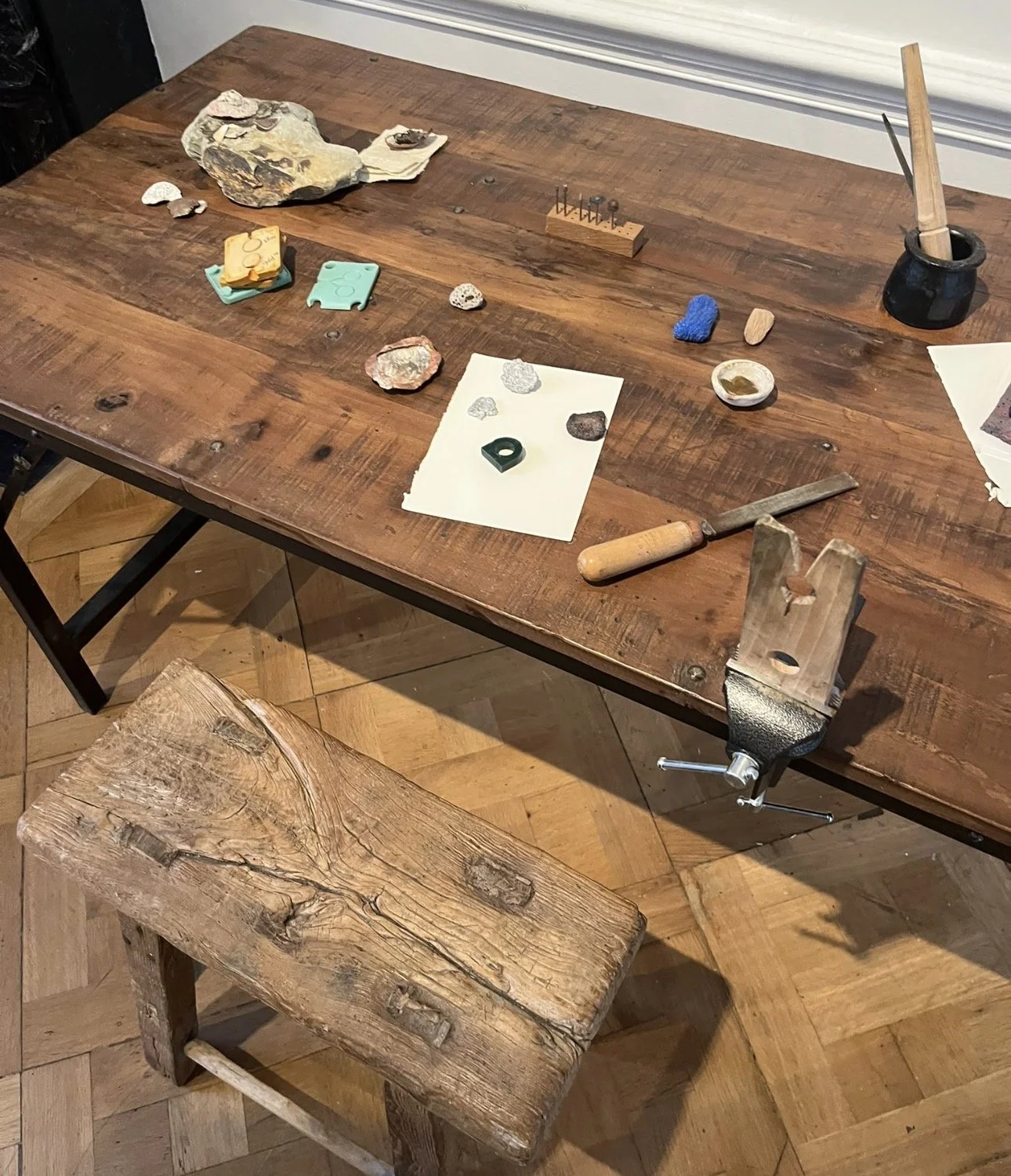
Also at Brompton Design District, the Toast: New Makers programme displayed the winners for 2026. Toast is a clothing and homeware company which sponsors new designers and craftspeople and gives them the opportunity to promote and sell their work. For London Design Festival, Toast displayed the winners in a wholesome way, with each designer displaying their studio desks and how they produce their work. It offers a personal view into the daily life of designer-makers and their creative process. Each desk is an opening into a new identity, culture, and everything that shapes a designer. It is so personal and reveals so much about each maker. Each desk included prototypes, references, tests, sketches, which are crucial to the design process. It was refreshing to see the design process highlighted at this show. Usually, only the final product is displayed, so you really got to see the context and influences behind each craftsperson.
I hope this is a trend that we see more of in the future, where we slow down and appreciate the personal craft of making instead of just the final piece.
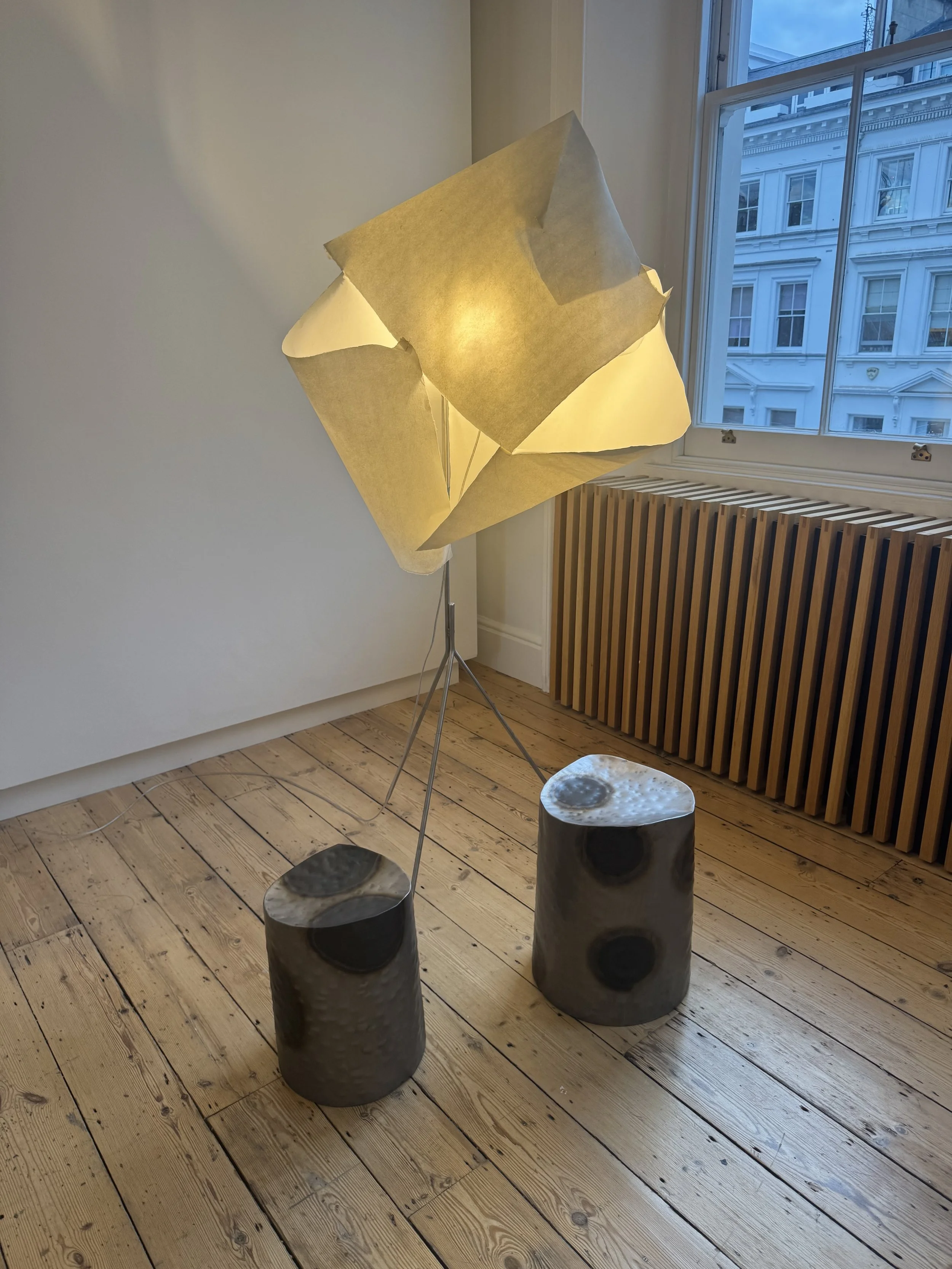
Finally, at Brompton Design District a collection that stood out to me was Jesse Butterfield’s A Veiled Boundary, where he explores the materiality of steel and paper through products. The room was filled with heat-treated and hammered steel stools, and sewn handmade paper light fixtures which explore the beauty and playfulness of folding paper. This collection stood out to me because with two common and sustainable materials, Butterfield explores the possibilities of what could emerge with testing. Heat-treating, hammering and you have a stool with unique texture and colours all from sheet steel. With the paper he folds, crunches, sews and twists it and with his exploration a furniture collection materialized. Paper and steel are endlessly recyclable materials, and with experimentation you can create an endless variety of products. This is another example of how we can be resourceful and inventive with even the most common materials to create beautiful products.
Material Matters is a fair within London Design Festival which highlights the importance of materials in design. It is a space for emerging designers to showcase new innovative ideas for materials which are sustainable for future design development. A highlight from the fair is Neve Beill’s ceramic collection. She creates ceramics out of foraged wild clay and even cigarette ash. For Material Matters she showcased a collection titled Thames Matter which is made from clay collected by the River Thames and other waste material such as reclaimed glass and sand. Materials which are seen as waste are transformed in her work into beautifully crafted ceramic cups and vases. Another example of transforming waste into beauty at Material Matters is designer Tabitha Bargh who transforms waste cardboard and estate agent boards into elegant light fixtures. Material Matters included many talented designers who blended technology with common or waste materials to create designs which are sustainable. This fair highlights how emerging designers are being considerate and aware of environmental challenges during design development which makes the future of design seem very hopeful.
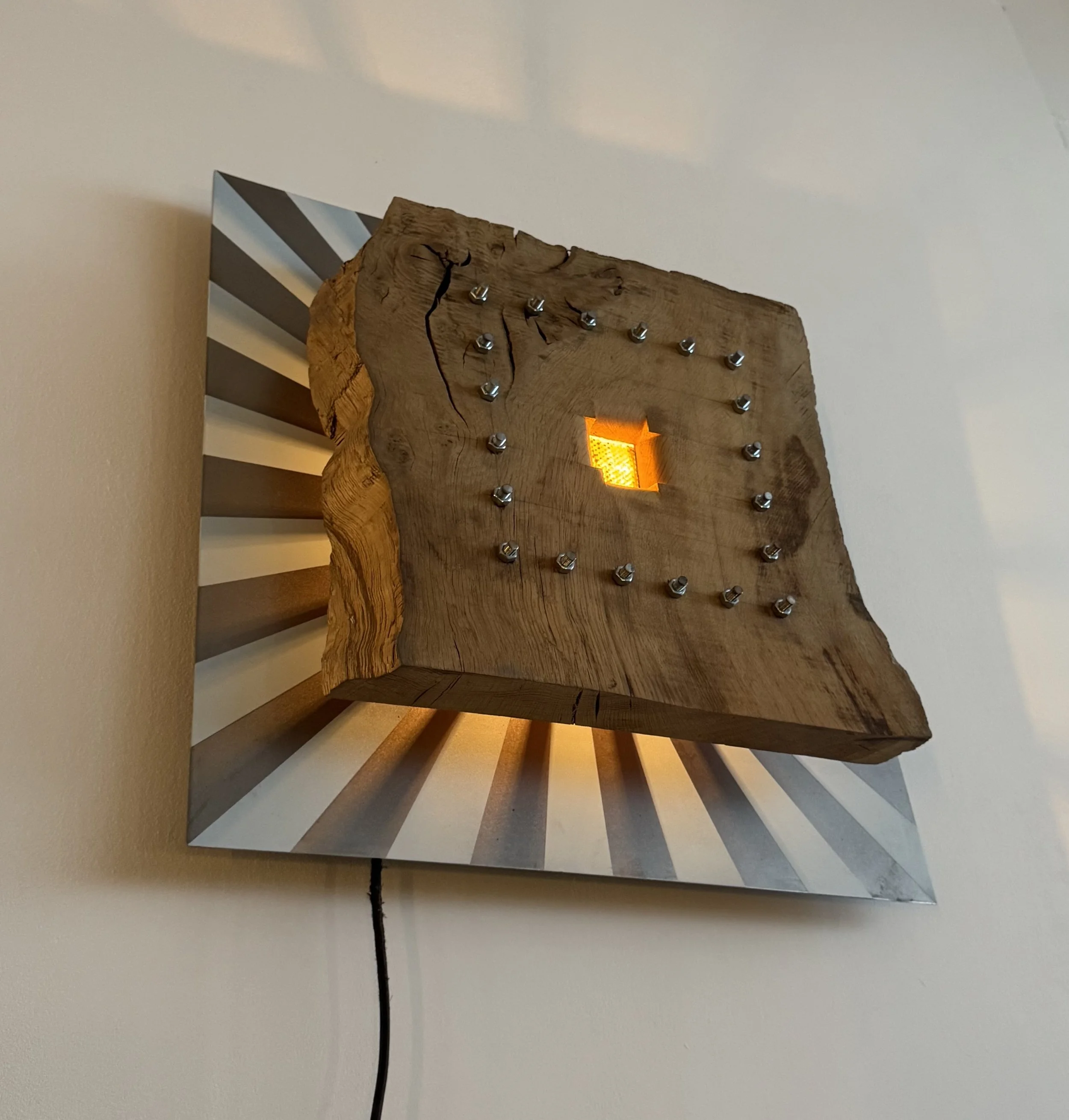
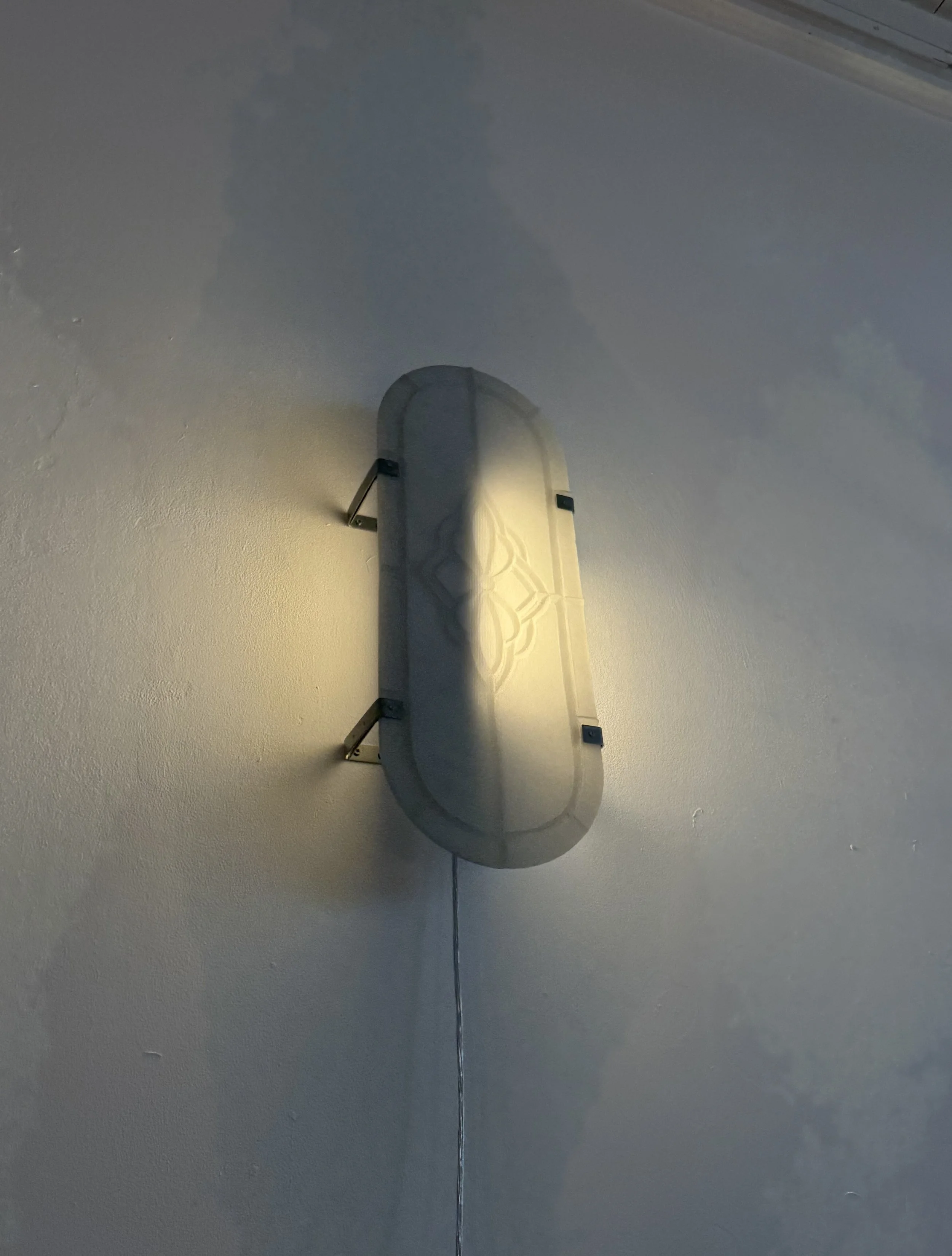
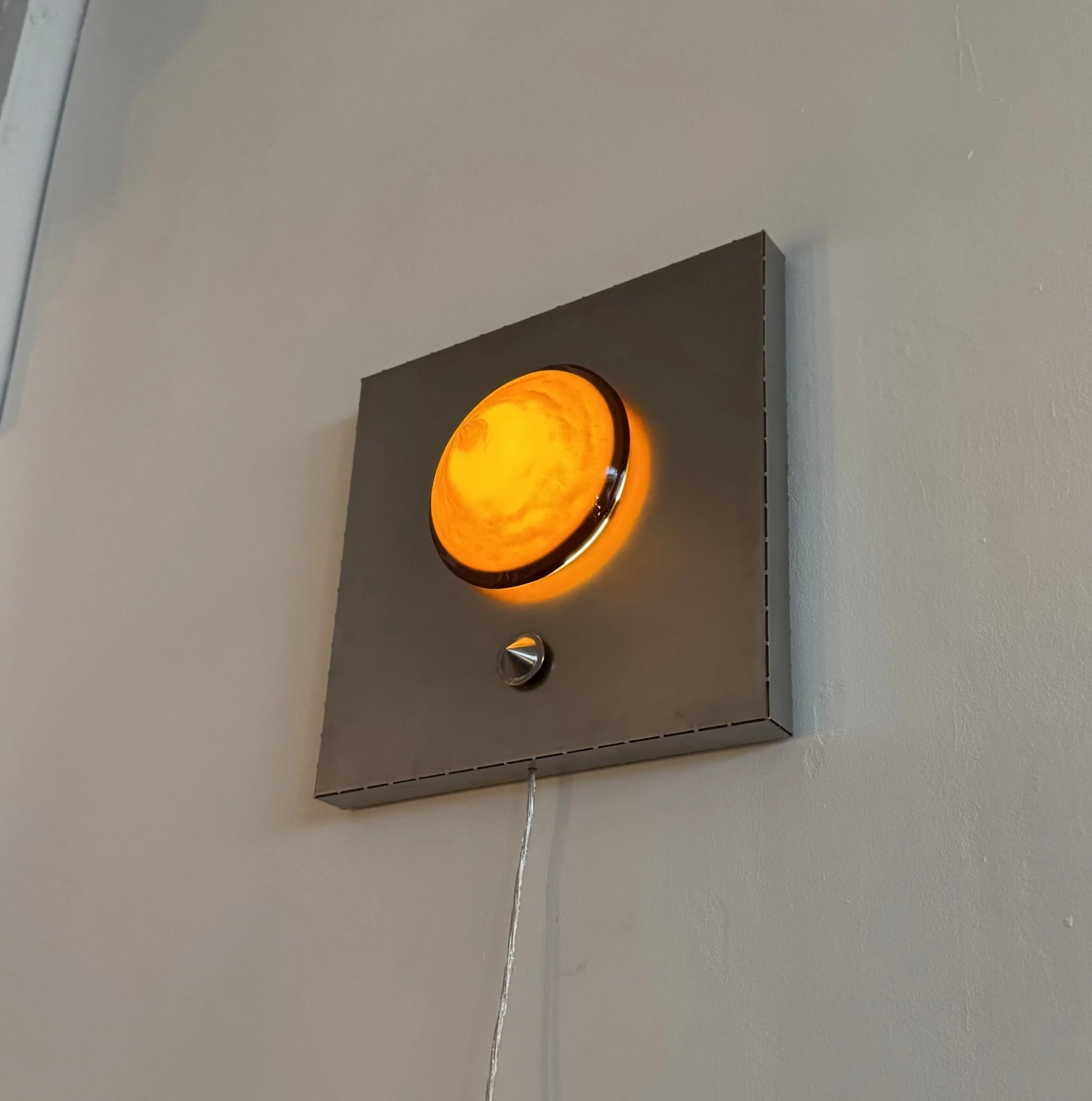
At Hackney Downs Studios it was the first time in seven years that London Design Festival hosted a studio led event. This means that the event takes place in the personal studios of the designers in residence at Hackey Downs. This event was curated for one night by OP-OV, a research-led design studio, and hosted by All Ears, an art and design workshop. The event presented designs from thirty London-based designers, so you really got to feel the spirit of London design and from where it all happens – the studio. The range of themes and materials was different in every room, and it was exciting to step inside every studio. There was a gorgeous collection of abstract mixed material light fixtures by Hanna Fastrich, Demi Oyeyinka and All Ears studio, including wood, metal, resin and glass which had a soft warm light and a sacred atmosphere to them with symbolic organic motifs. In the same room, clocks were reimagined with abstract photographs by Julian Wasilewski. Each clock featured an abstract theme from food such as rice to concepts such as “strategy” or “consistency” with the numbers being drawn on the wall itself. Reimagining products to extend to other mediums like photography is a clever way to question how we perceive common items.
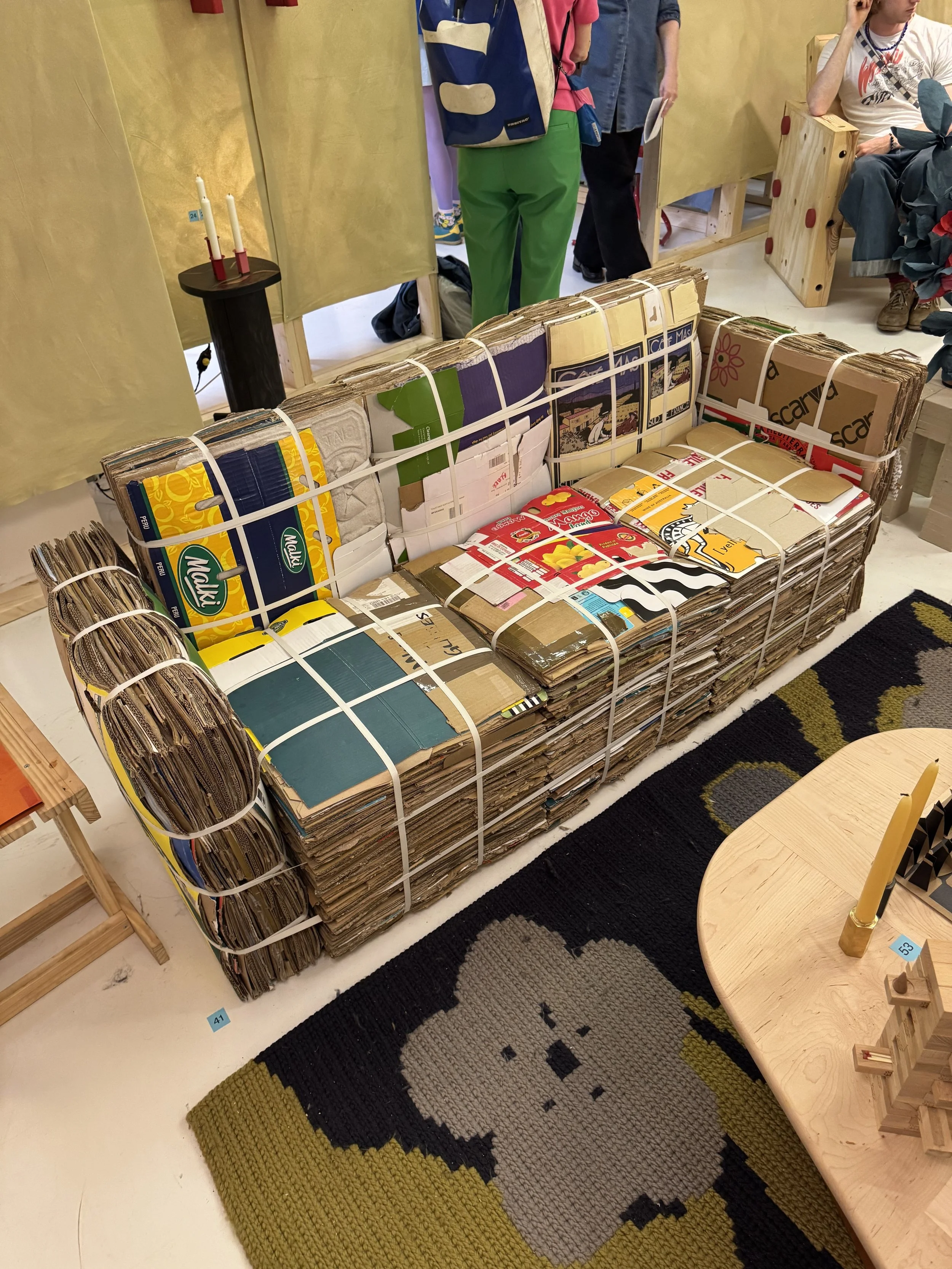
The next show featuring emerging designers which really stood out to me was With Limitations curated by Design Everything at Aram. Aram is a large showroom for commercial and established design companies such as Vitra and Kartell. When you enter the space, you find yourself amongst iconic pieces of industrial design, then you follow the directions down the stairs, and you enter a fictional apartment filled with products from 100 emerging designers. The whole purpose of the show is to highlight the main limitations that young designers face and how these constraints have led to innovative outcomes in design. The main limitations on display were time, money, materials, space, equipment and I have felt the constraints of these factors throughout my own work. Limitations are a reality that we must adapt to and all the designers who showcased clearly used these limits to their advantage because everyone produced beautiful and functional objects. A standout piece was Max Hayward’s Baler Sofa. It was made from repurposed cardboard boxes wrapped together to create a compact sofa. Prima Materia is a studio which recycles waste offcuts or demolition scrap and turns them into beautiful designs.
At With Limitations, they displayed the Adeline lamp and Montague armchair which are both made from waste from a demolished tower block in central London. The armchair is made from the original staircase from the tower, and the lamp is made from the original door panels, and the emergency exit panel. It is amazing how construction waste was transformed into two pieces of elegant and modern furniture; it is inspiring resourcefulness.
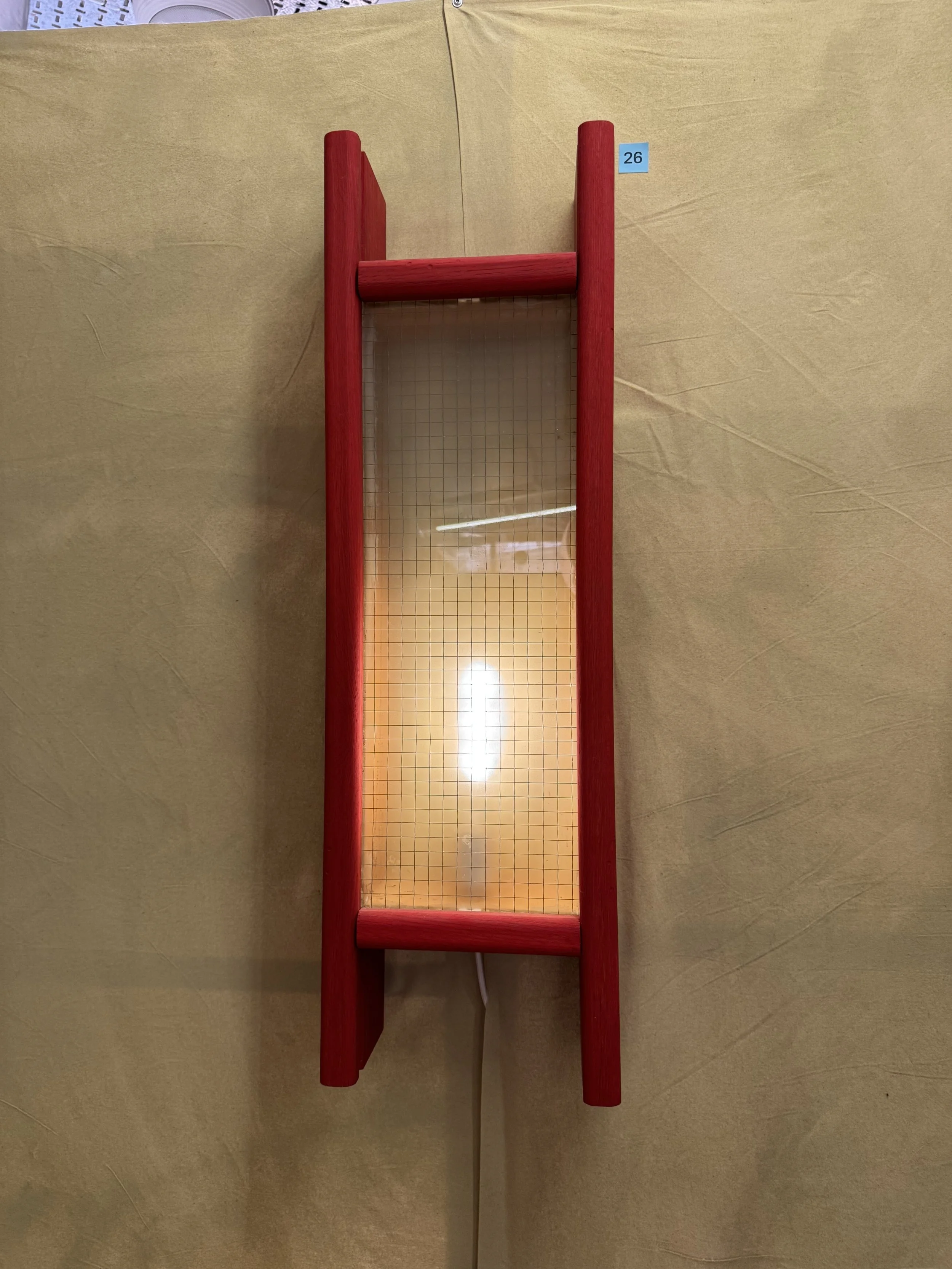

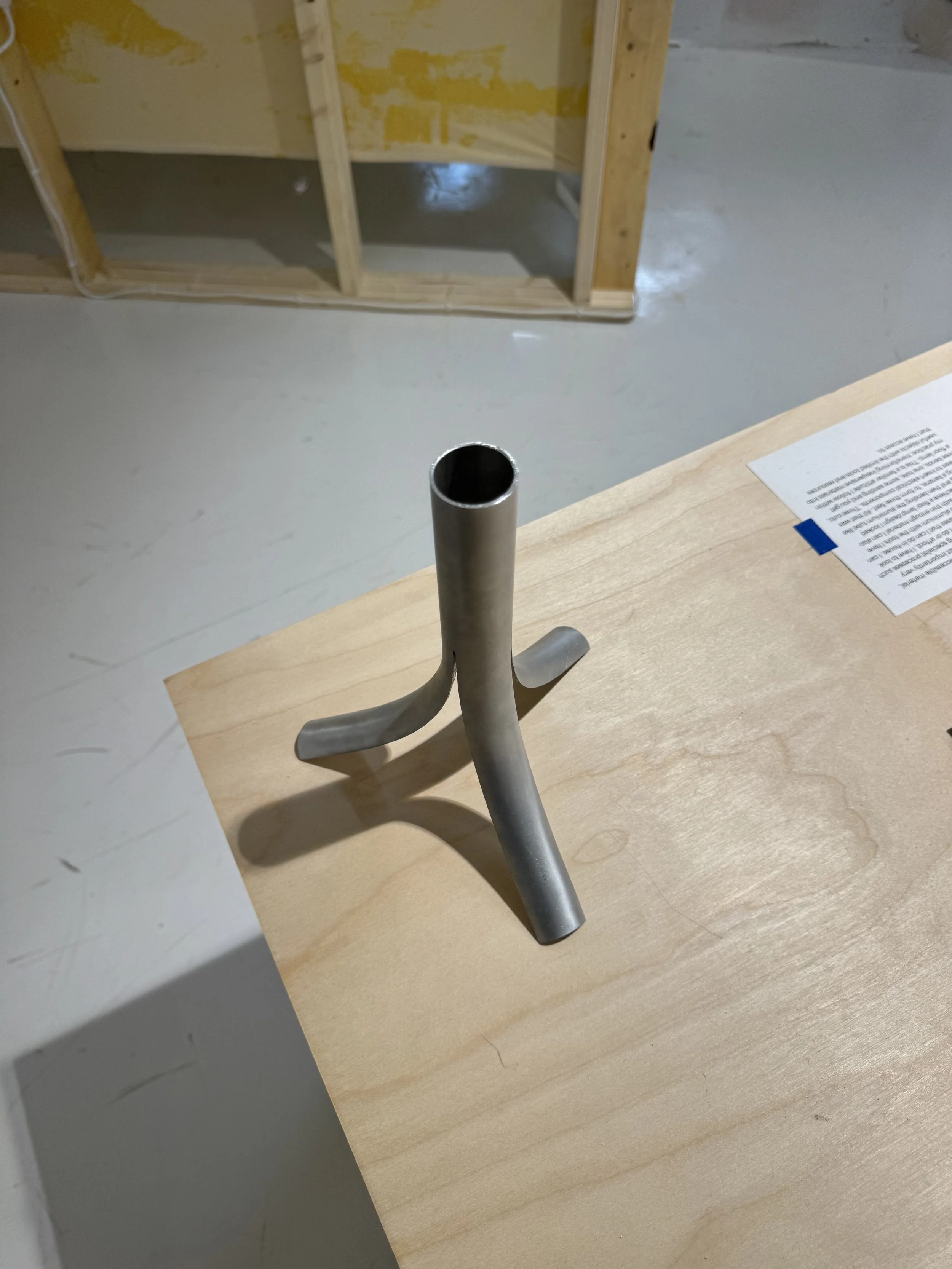
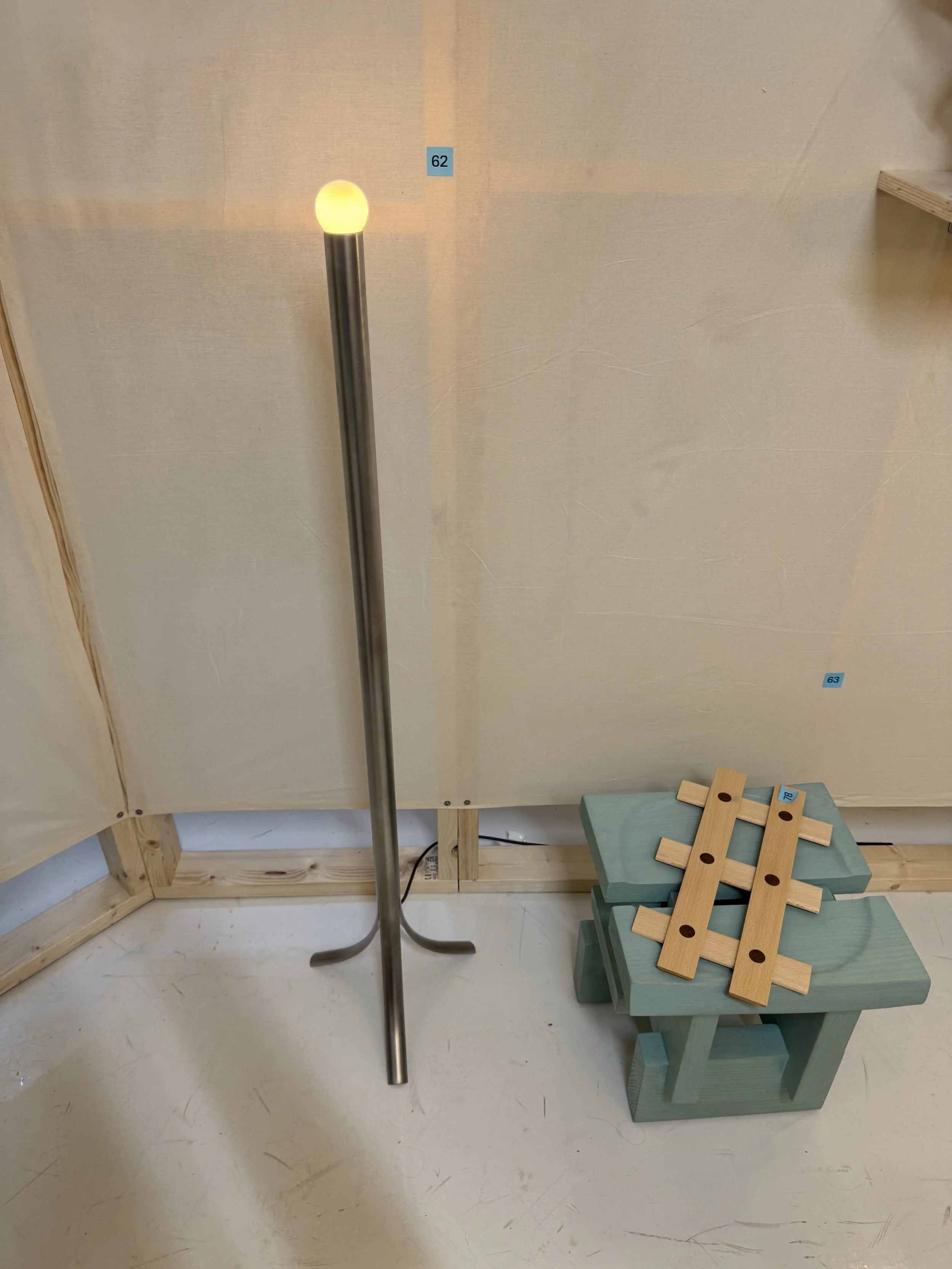
Lastly, another piece with a clever construction method is Jake Robertson’s Tall Split Lamp. Manufacturing can be a costly process and there are clever ways that designers have come up with ways to DIY. To create a base for the lamp, Robertson made three cuts on the bottom of a tube and hammered each piece outward, and then he had a perfect three-legged stand for a light. Young designers do what they can to keep making what they love, and they will adapt to limitations to get there with true ingenuity and care.
In London, the reality of the issues we face in design is hard to avoid. Critical design is a branch of design which imagines future possibilities of society and the environment within design objects. It creates an embodied version of reality, a possible outcome so that we begin to question our actions today, instead of when it is too late. At the V & A museum I went to a lecture by Anab Jain, co-founder of Superflux Studio, who imagines future objects from future societies. Design is timeless, so exploring a possible design future is a helpful way to trigger change in our current present. That is exactly what her work consists of, and she highlighted the importance of asking questions and creating conversations about what needs to change. Superflux’s latest work titled Relics of Abundance imagines when our future ancestors discover iconic designs from our time, and they try to find a meaning behind it. The iconic Marcel Breuer Wassily chair becomes a relic of the past which is worshipped as sacred.
It makes us question how our present society values commercial success and how future generations will perceive the objects we value with so much importance today.
The V & A also hosted London Design Festival projects, including an emerging designer commission which also featured a piece of critical design. The Server by Playfool (Daniel Coppen and Saki Maruyama) is an interactive installation in which you participate in cleaning part of an AI data centre. With the AI race accelerating quicker, AI data centres are being built and are perpetuating the cycle of rapid consumption that is prevalent everywhere in the market. Playfool wants to resist the acceleration by focusing on the one task everyone must do to slow down – clean. You cannot find loopholes to cleaning; it’s part of our routines, so it brings this familiar human task to a robot.
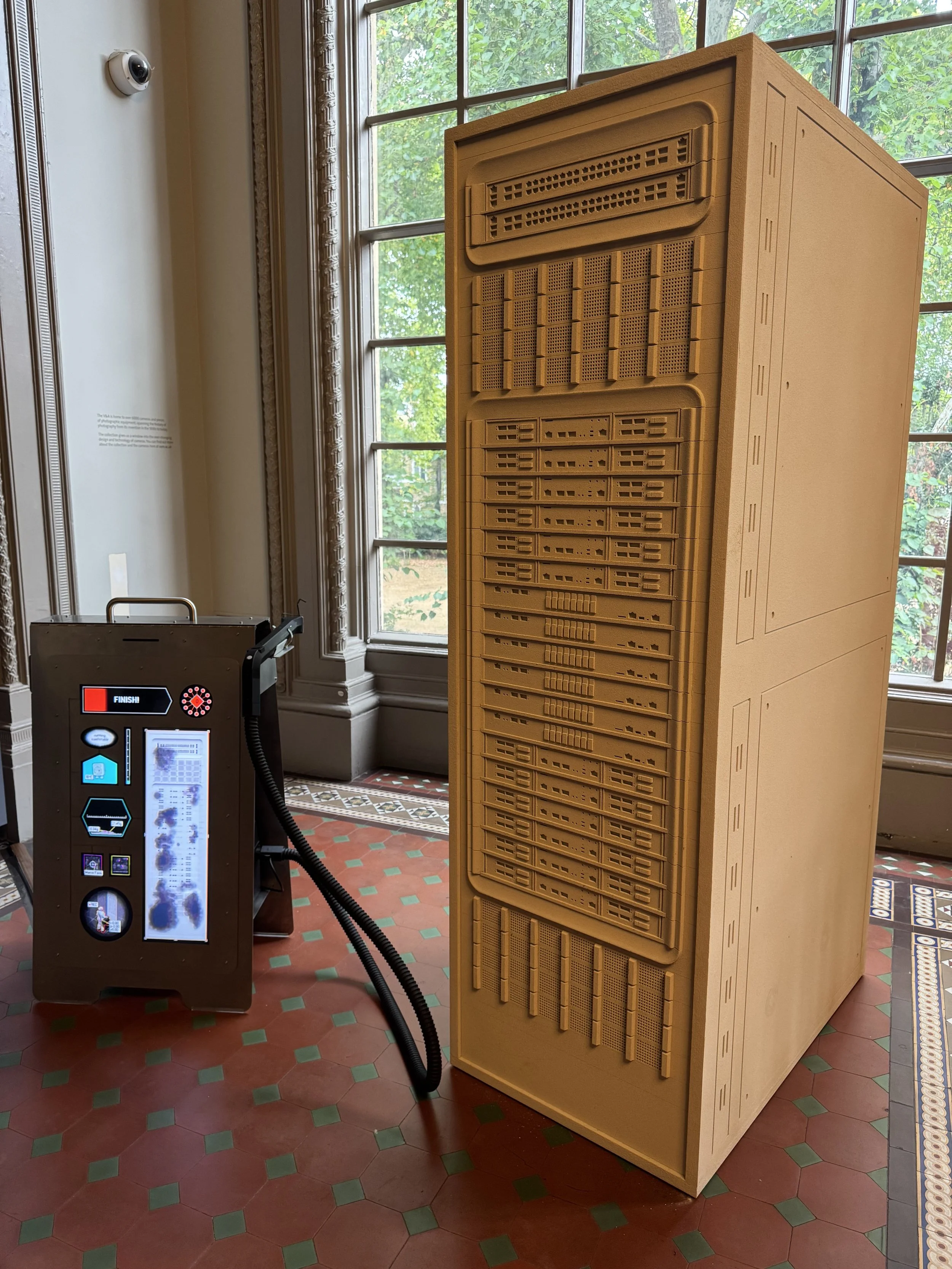
It felt strange to clean the machine: I felt like I was serving the machine, which is a dystopian feeling. But I believe it is a good sign that I was uncomfortable. A project like The Server that can highlight the dangers of the mass production of AI data centres, and spark important conversations about our technological future.
Lastly, I visited The Pangolin Shield on the Strand, an outdoor installation by Studio Saar and Atelier One, which is informative and raises awareness on important issues. It was a large canopy covered in scales intended to honour the worlds most trafficked mammal which is a pangolin. They are a small mammal with beautiful scales, but they are the subject of illegal trafficking for their meat and scales. In the installation, half of the scales on the canopy are made from knups: traditional rain shields for farmers working in north-east India. They are blue and green and create these large scales that create the appearance of an enormous pangolin in central London.
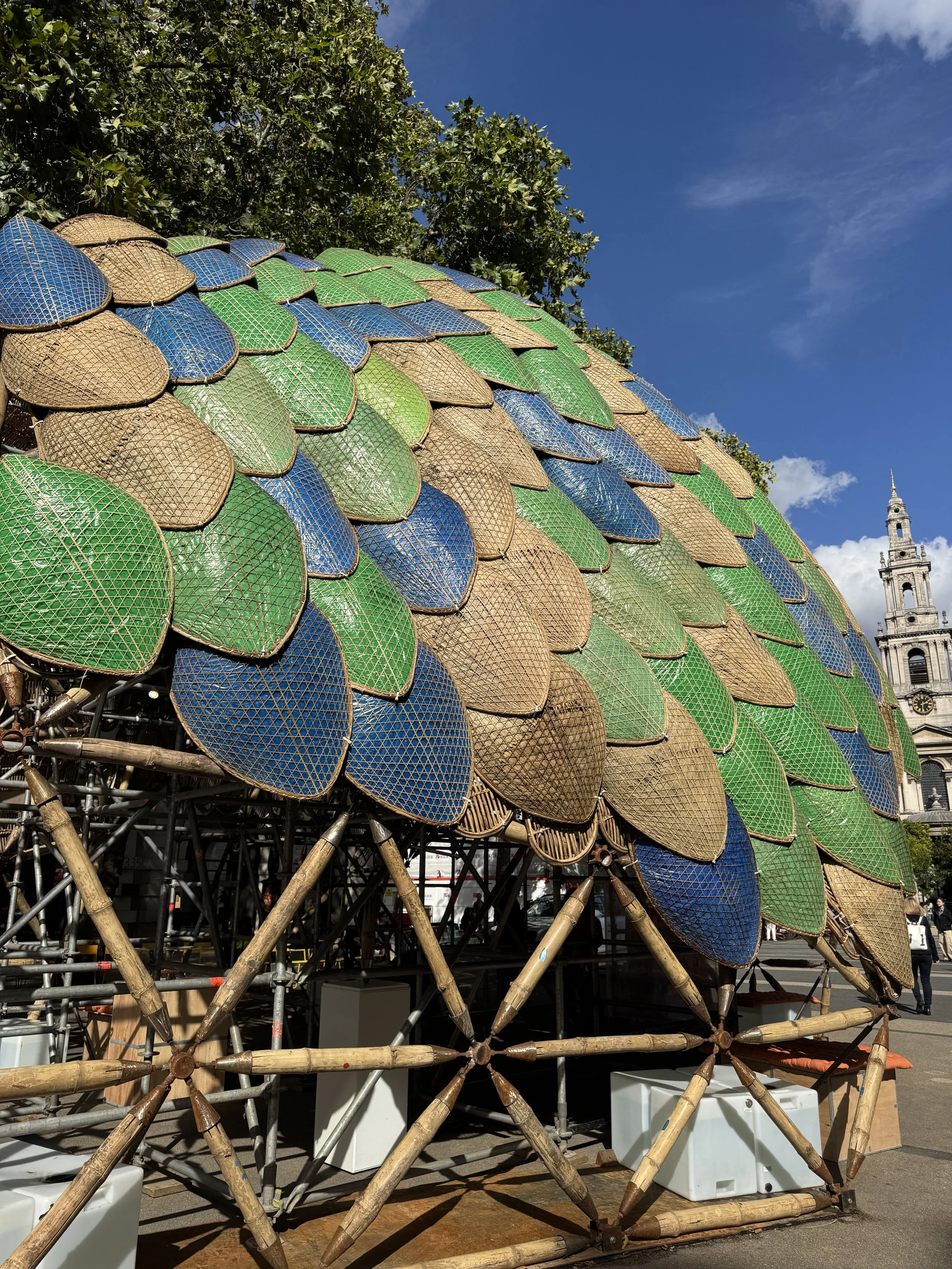
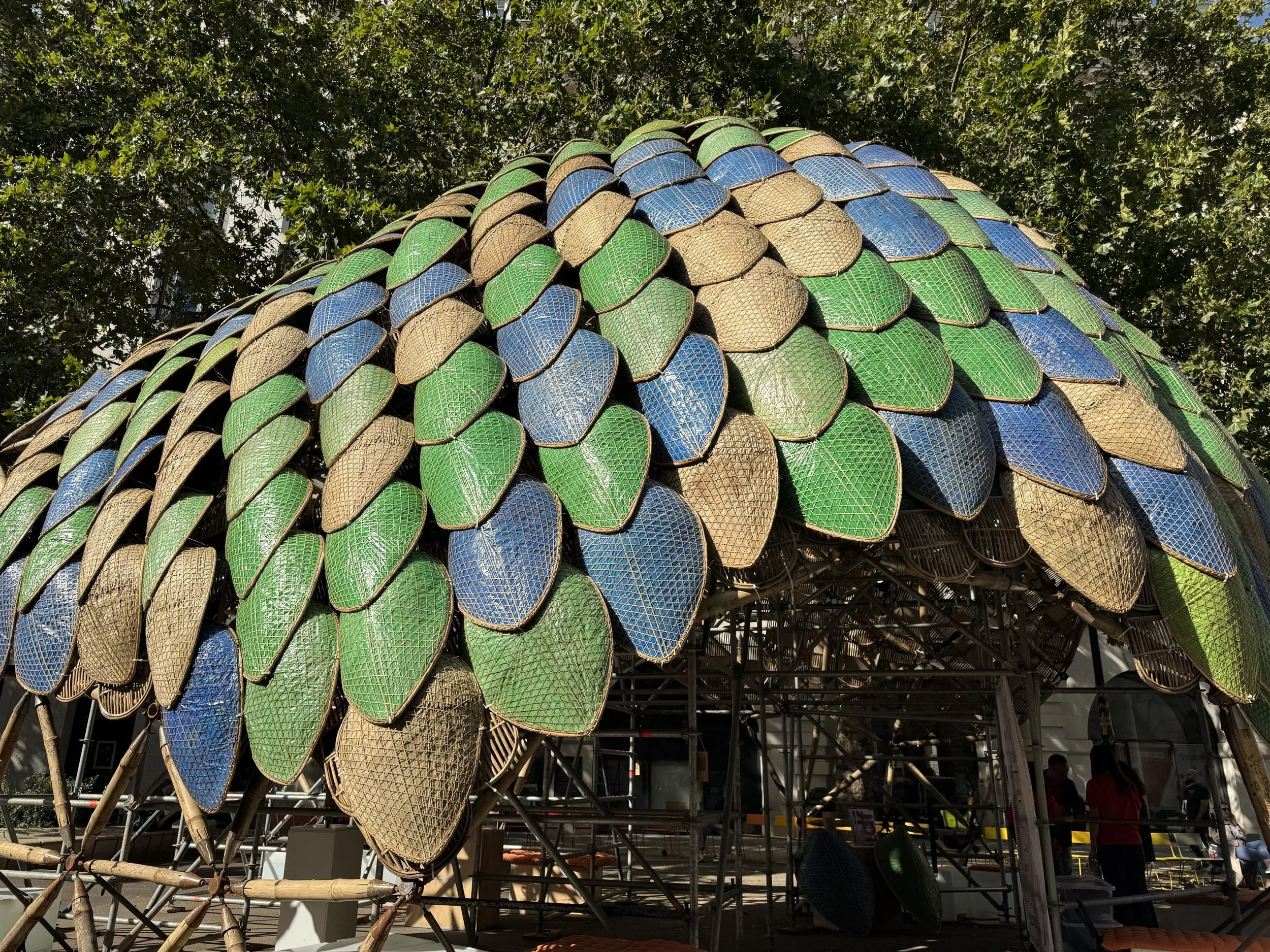
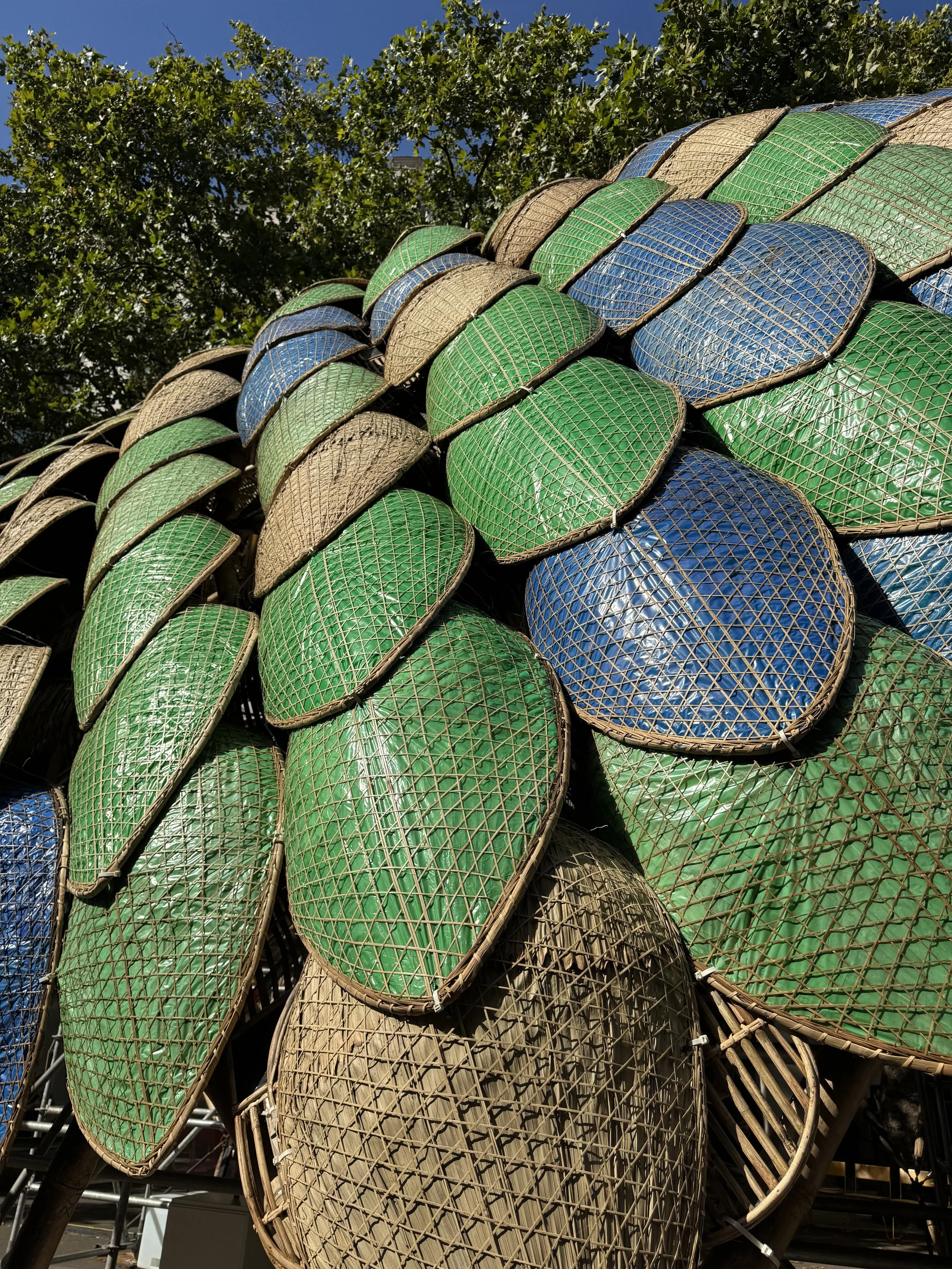
The second half of the scales on the structure are made from traditional bamboo police shields from India, which are transformed as a cover for the canopy. It transforms a symbol of power and confrontation into a place of gathering. The location of the installation is also by India House, with the memories of colonialism which certainly fit into the narrative of this work. The canopy is beautifully built with a natural bamboo interior and the colourful knups on the outside, but it is also a place of education about Indian history, culture and traditions and the sweet pangolin.
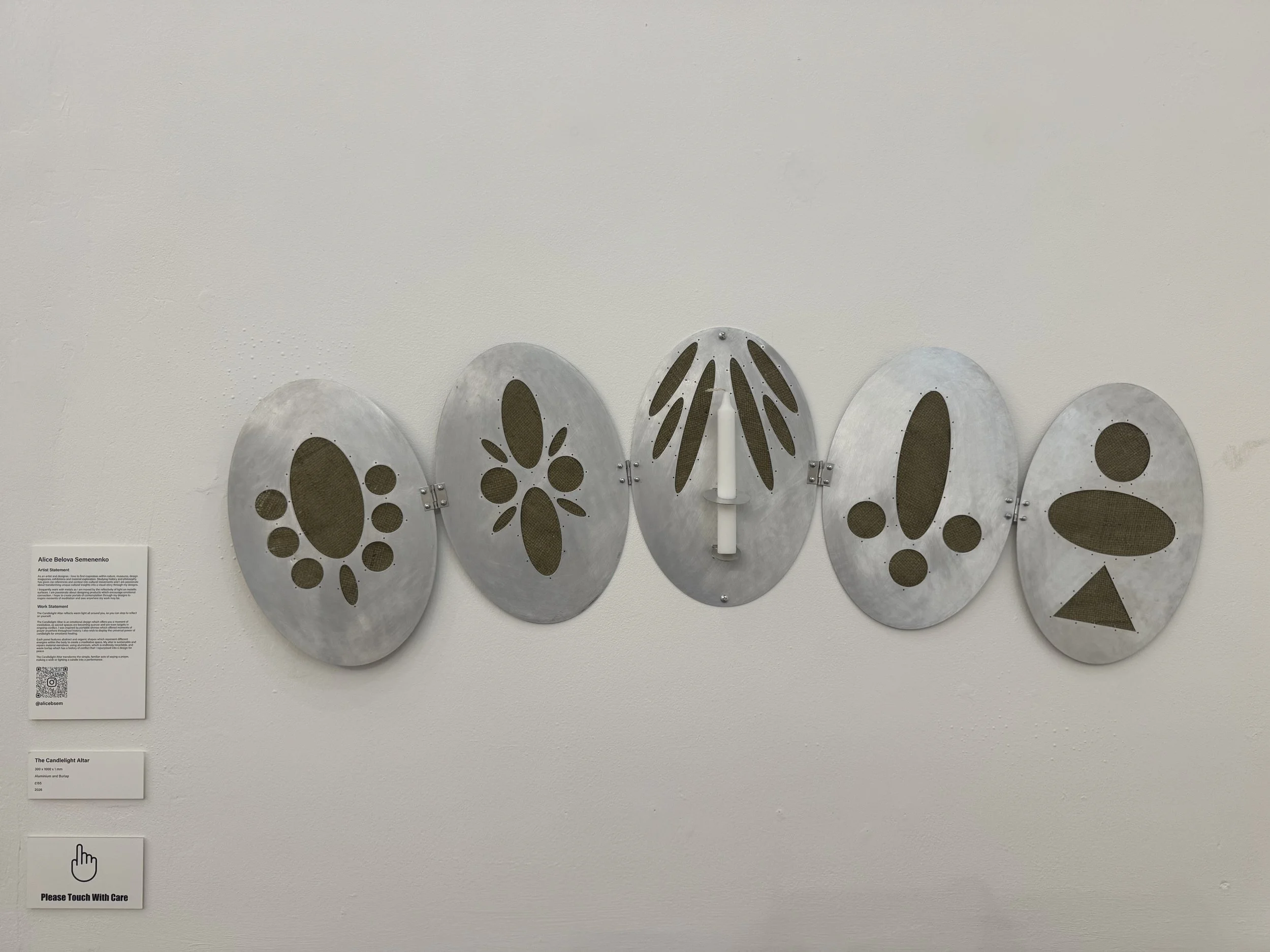
I also wanted to mention that I also participated in this year’s London Design Festival at Blackdot Gallery for the theme The Strange Everyday. My Candlelight Altar is a candlelight fixture which is meant to create a space for emotional repair, a place to slow down, using sustainable materials and inspiration from meditative sketches. Every designer who showcased alongside me created unique work ranging from jewellery, vases, to an interactive human “bird nest”. Inspired by cultures, identities and unique references each designer brought a piece of themselves into the gallery. I am grateful for Blackdot Gallery for selecting my work and the wonderfully curated display they produced.
The range of this year’s London Design Festival was captivating and inspiring. In London you got to see the truth of being a young designer facing the limits of the market and industry, but also the limits of day-to-day studio work. You got to see the truth of the design market and complex issues from AI to endangered species.
If Milan won’t say it, London will: it is an honest and raw place. This is where adaptability and creativity create the best solutions, the most unique outcomes and where emerging designers aren’t afraid to take their time to test and discover new designs for the future. Young designers, including myself, are working with care and awareness to create the most creative solutions for developing products, materials, philosophies and aesthetics.
We are lucky to work in design and to be the people who shape the future because design is timeless. So, let’s get back to work.