Paulin, Paulin, Paulin –The New Playground for Adults
As an older sister with two younger siblings, I end up at playgrounds almost every afternoon. Playgrounds are crucial to human social, physical, and mental development in our childhood and they have always represented fun through action, and in our imagination. Playground games and areas have attractive features with clever design affordances for children, and for adults, to signal interactions like climb, push or twist. These affordances can be through textures, materials, colours and shapes which have taught us from young age to interpret the semiotics of the objects around us. As we grow up, we experience these features through products and furniture. I feel nostalgic in playgrounds, and I feel the urge to interact with the bright and curvy games in front of me even as an adult.
This is the power of design, and I recently felt this wonderful excitement when I first looked at the furniture of Pierre Paulin. His legacy is being guarded and carefully curated on social media and in public displays by Paulin, Paulin, Paulin, the project created by his wife Maïa Paulin, which is currently being run by their son Benjamin Paulin and his wife Alice Paulin.
As we grow up, playgrounds have a new setting in our lives, physical activity happens in gyms. Playing happens online: on our phones or in video games and perhaps our playful curiosity is diminishing with easy access to digital entertainment right on our phones. “Adult playgrounds” are appearing throughout the world, and no these are not casinos or clubs, but they are outdoor gyms or climbing wall centres. (Dreamland, 2025) It is an incentive to get us to socialize with others and improve our health with movement, like a playground for children.
Furniture design can help to spark childlike wonder again in our private and communal indoor areas by blending visual attraction, comfortable interaction, movement and functional beauty. This is a recipe Pierre Paulin has mastered.
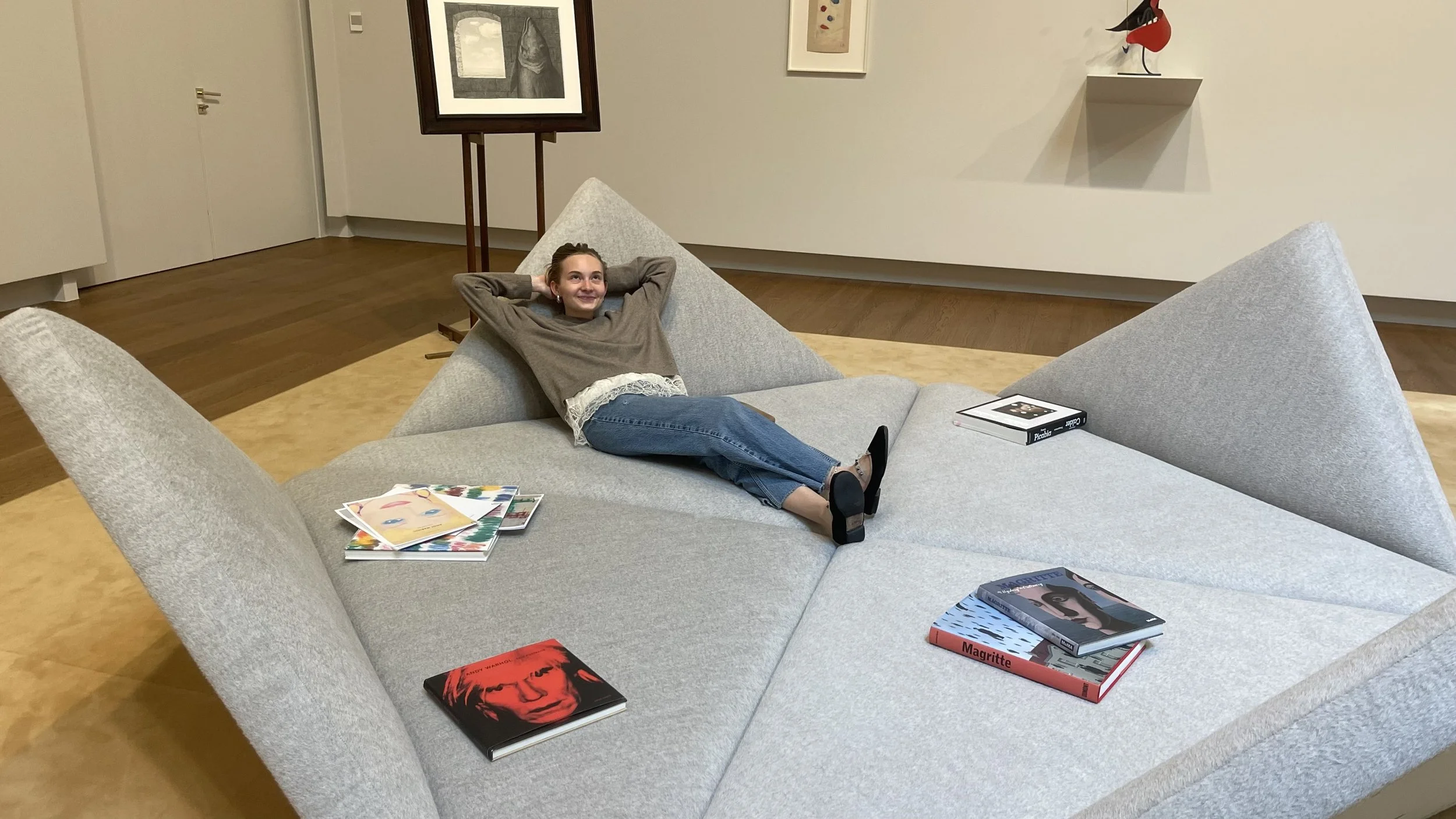
Alice with Tapis Siege
At a talk with the Architectural Association in London, Benjamin and Alice Paulin spoke about the power of Pierre Paulin’s designs to create social interaction. If we look at the “Ensemble Dune” a modular seat designed from 1968 and 1972, it is composed of multiple soft sofa parts which fit together to suit your space in different combinations. I have seen various layouts of the sofa ensemble but the common set up is like a wide conversation pit where you crawl, sit and lay down within the enclosure of the seats. This sofa layout forces you to interact with other people who are sat with you, as you are all facing each other. You can also see this with Paulin’s "Tapis-siège" sofa from 1968-1980. These designs spark conversation, introduction and socialising which is beautiful in age of separation through technology even in our own homes. The “Ensemble Dune” and the “Tapis-siège” both look like a sandbox you find in playgrounds, which is also specifically designed to encourage socializing between children. The textures in a sandbox stimulate the minds of small kids and help them to develop motor skills. (BBC, 2026) The visual parallels between both objects are clear with the soft curves and textures, but so are the mental and social factors, because these designs stimulate our minds as adults through the same use of shapes, and push us to create connections with other people.
Curves and climbing objects in playgrounds reflect natural designs of hills and mountains so kids climb up curves, slide down, and it teaches them to adapt to different shapes that are part of nature. Humans adapt to shapes in every moment, whether they are natural, or it is how we hold the handle of a cup of coffee or curve our backs to adapt to seats. A curved shape supports our backs and creates a simple comfort in a low seat. Pierre Paulin took this simple organic feature and created interactive masterpieces. Playground shapes are round, curvy or bubbly and his seats have colours, width, and rounded shapes which are irresistible to the senses. The “Déclive articulée” (1966-68) is an adjustable seat design created by Paulin, which can be shaped to create seating or curves for every position and everybody. You can create any shape you want. The seat is wide so multiple people are welcome to cooperate to adjust the seat how they wish. It is playful, functional and so wonderfully simple. The “Déclive n°5” (1968-72) and the “Face à face” seats both have two curves opposite each other, which means people can face each other and connect while laying down comfortably. These two models are fixed but the excitement remains: you can climb the curves, you can rest, you can interact and you can create social connections. This is the new adult playground in your home using simple, open and beautiful design.
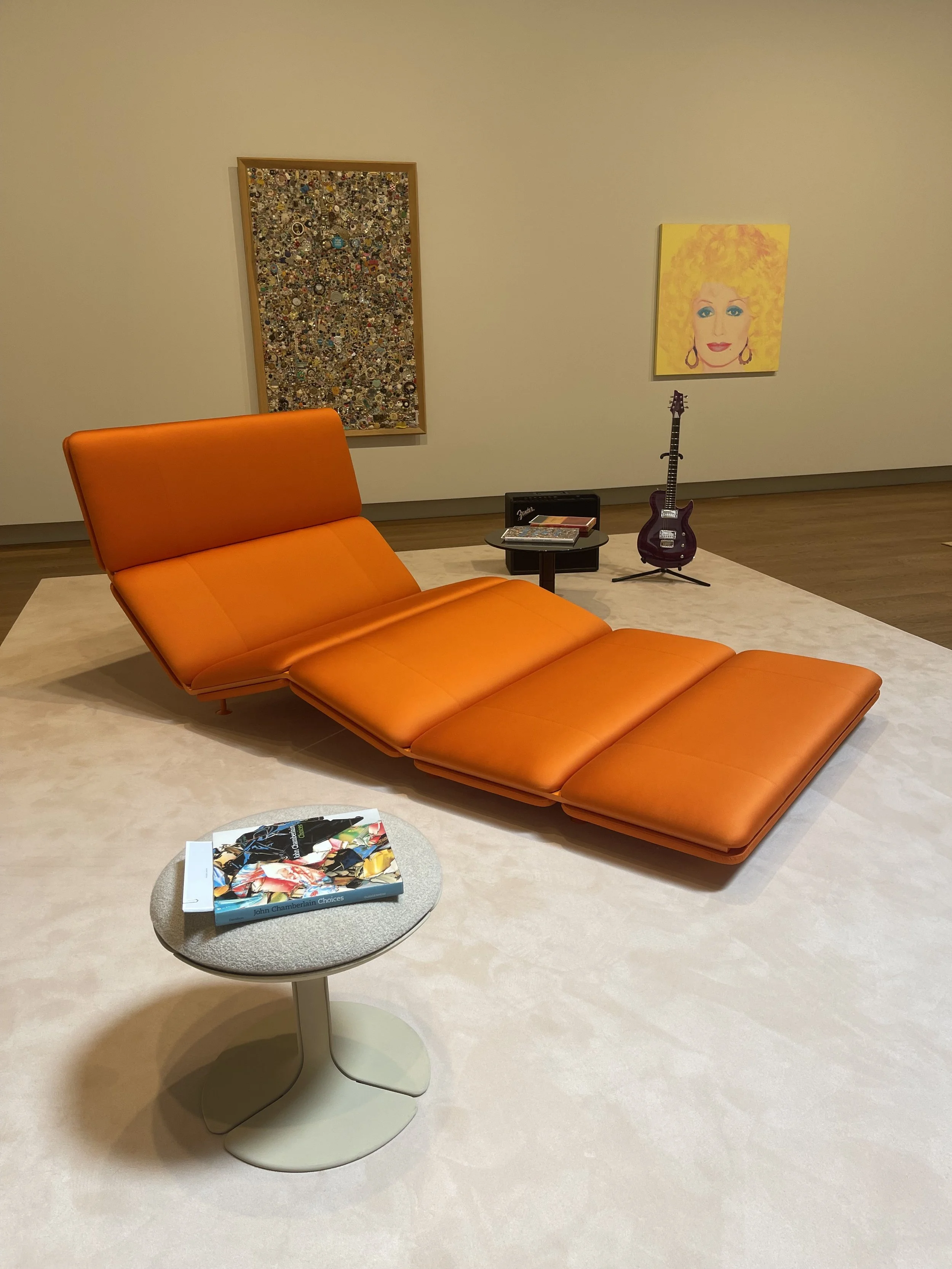
Déclive n3
Pierre Paulin’s goals was to make furniture interactive for everyone, a social object with simple design, which elevates function rather than artistic elements. The social principle is crucial for Benjamin and Alice Paulin who have launched a music project called Sounds like Paulin where different artists can interact with each other and record music in a studio. Furniture and seating can foster these creative relationships; the sofas and chaise longues can be the key to creating important musical collaborations and conversations for the future. Outside of music, anybody using Paulin furniture in indoor spaces can benefit from the designs to create a hub for social activity and community. It is a relaxed environment where discussions can flourish, and we all become kids in the sandbox again. Design nurtures and creates important human relationships from playgrounds to our offices and homes when we grow up. Design is a timeless principle, the common factor in our lives, which is why it is so important that design remains exciting and interactive to continue to spark childlike wonder at every stage in our lives.
At an installation of Paulin, Paulin, Paulin x Hauser & Wirth I got to speak with Alice Paulin about Pierre Paulin’s designs and playfulness. When I explained the theme of my article, Alice understood the connection straight away, she has heard the comparison before. Paulin furniture is so visually and physically playful that the comparison to a playground is clear.
I asked her: which design is the most playful? She said the original “Déclive”. It is interactive, adjustable and it can be shaped differently for anyone. It is a curve for your back, a cocoon for privacy and it pushes our imagination as adults.
I asked her how adults react differently to Paulin designs compared to children, and she explained that unfortunately we do lose our imagination as we grow older, she sees a difference in how children create imaginary games for the designs, but adults use the designs for comfort and socializing more than play. I was intrigued if anyone has ever used a design in a unique way, and she told me that her children use the “Déclive” to build forts. This is such a nostalgic childhood experience of creating a small house to play with and it is such a fun way to interpret objects around us. As adults, our imagination is mainly used for work rather than games or experiences, so perhaps Paulin furniture could revive that spark of creativity in all of us.
Speaking of creativity, I asked Alice if people could customize a Paulin design, and she said that a client could choose from any colour, any material or texture if it works in manufacturing. So, clients really have no limit to their creativity, and they can have a very personal piece created for their homes.
Pierre Paulin created Utopian designs, his dreams of modern designs for the future which were often rejected in his own time. Benjamin Paulin told a brilliant story about when the son of his father’s furniture manufacturer was throwing a party. There were not enough seats but, in his garage, he had rejected prototypes of Paulin design, so he took out the rejected “Tongue Chair” prototypes for the party. The chairs were a success and people thought they were so wonderful that finally they were approved for production. Pierre Paulin’s designs were part of the zeitgeist that his generation couldn’t understand, but the young people could. Our generation needs these designs, that are playful and comfortable and push us to explore the world like when we were kids.
The Paulin, Paulin, Paulin project is making furniture fun again.
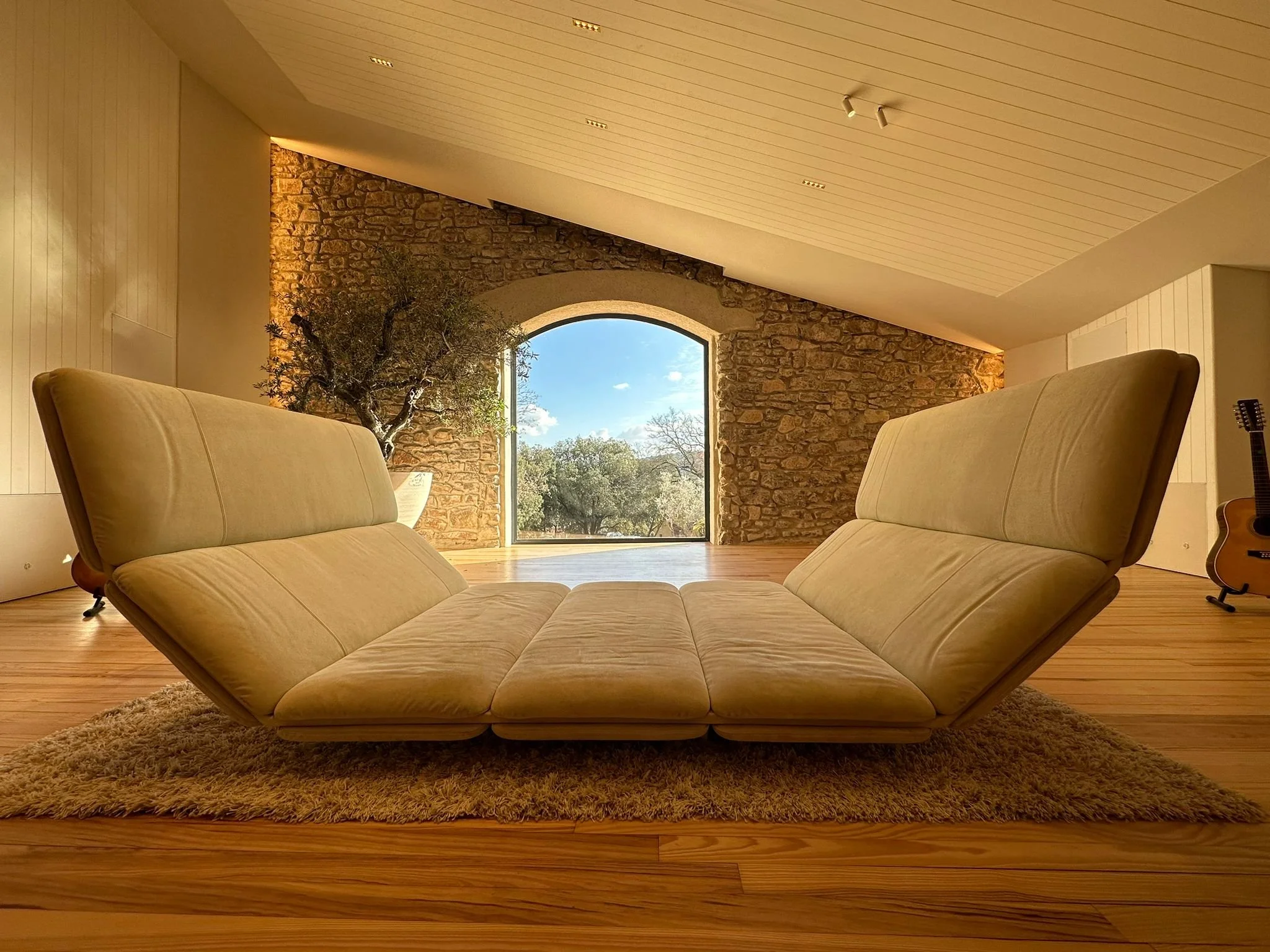
Declive n5
Thank you to Alice Paulin for contributing to my article.
Images are from MoMA and the Paulin, Paulin, Paulin website but for more images and information please visit the Paulin, Paulin, Paulin website: