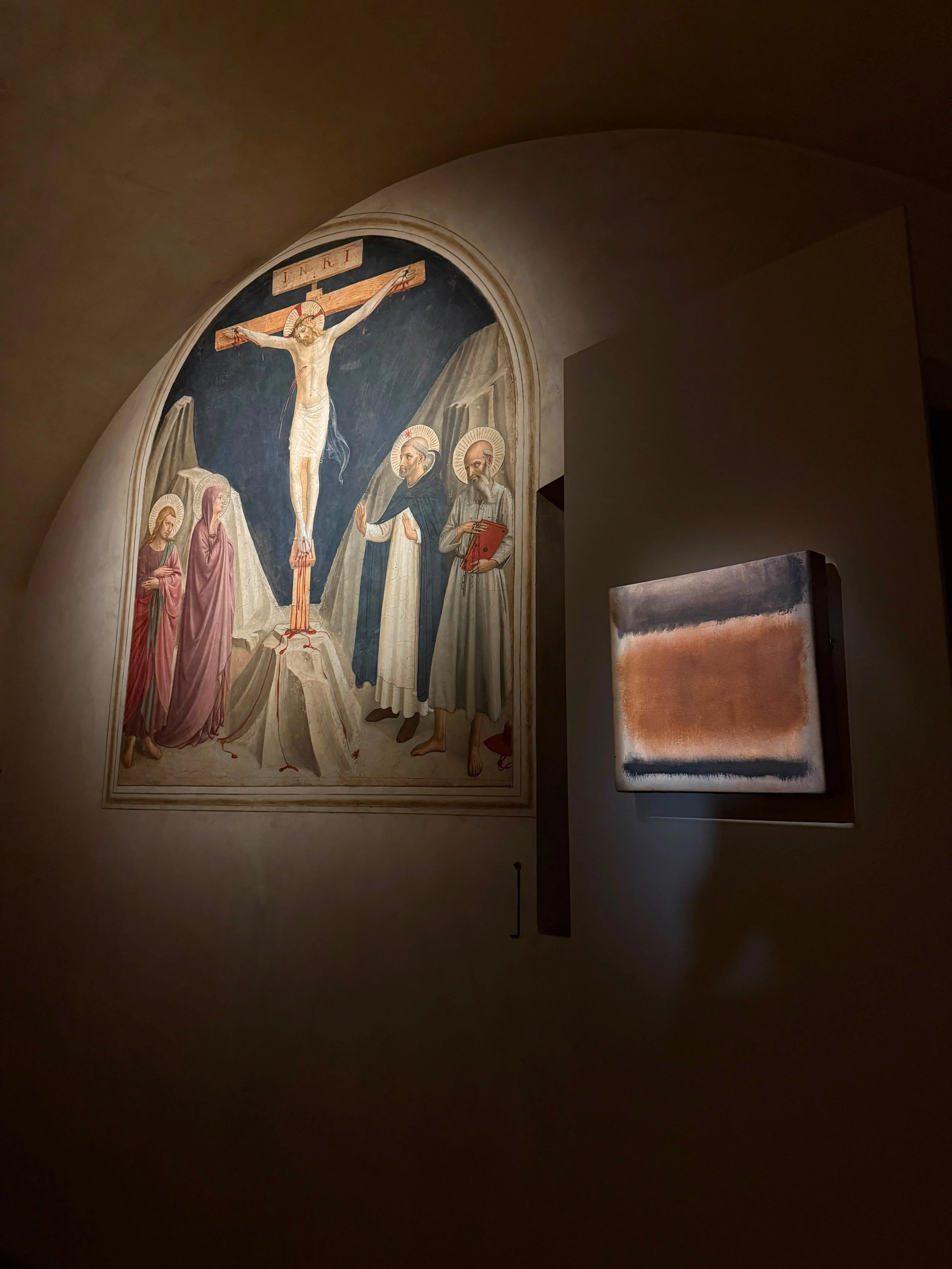
The Transcendence into a Rothko Canvas
Mark Rothko Exhibition in Palazzo Strozzi, Museo di San Marco and Biblioteca Medicea Laurenziana, Florence!
“How unusual!”, was my first thought, the juxtaposition of monumental historic buildings from the era of Medicis in Florence running back to the 13th century with the pioneer of abstract expressionism.
“I am curious to see what all this fuss is about”, was the thought that followed closely after.
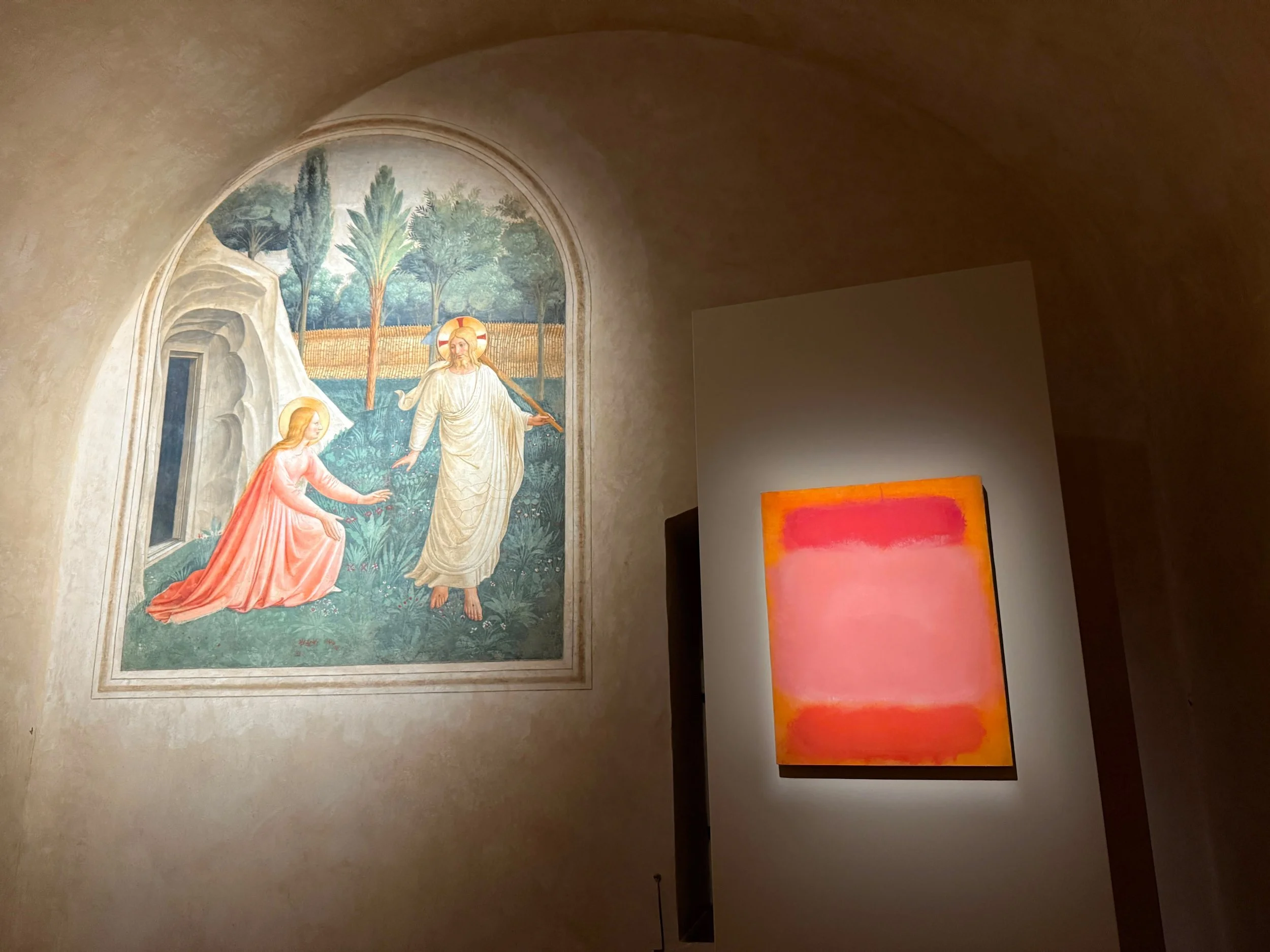
In fact, it was quite a unique experience. I had been to the Rothko Exhibition in Paris a couple years back, beautifully curated at the Foundation Louis Vuitton, stayed 4 hours, wondering, pondering and letting myself being completely taken over by these what seemed like mundane colourful squares. Oh was I wrong, it did not take long till I dove head first in these spectacular paintings.
I knew the exhibition in Florence would not fall short of this feeling, however, what I lacked to foresee was the deeper emotional sensation that surfaced as I walked these ancient structures dressed with one of the worlds most renowned artist’s works.
It was peculiar to see such intricate frescos, depicting the divine, the saintities and religious stories foreshadowed by canvases with formless floating colourful patches. Rothko was part of a movement called Color Field Painting where the focus moved from objects and figures like it has always been to large expanses of colours allowing space for the mind to interpret and create an emotional and spiritual connection with what is before you. The colour on the canvas becomes your field of perception rather than just a coloured object. Colours although often overlooked as details, are more significant than we give them credit for. As the theory of colour suggests, colours sit at the heart of the intersection between philosophy, psychology, art, culture and perception, although their meanings are variable, they carry strong connotations and associations. These being passed down centuries through religion, art and societies.
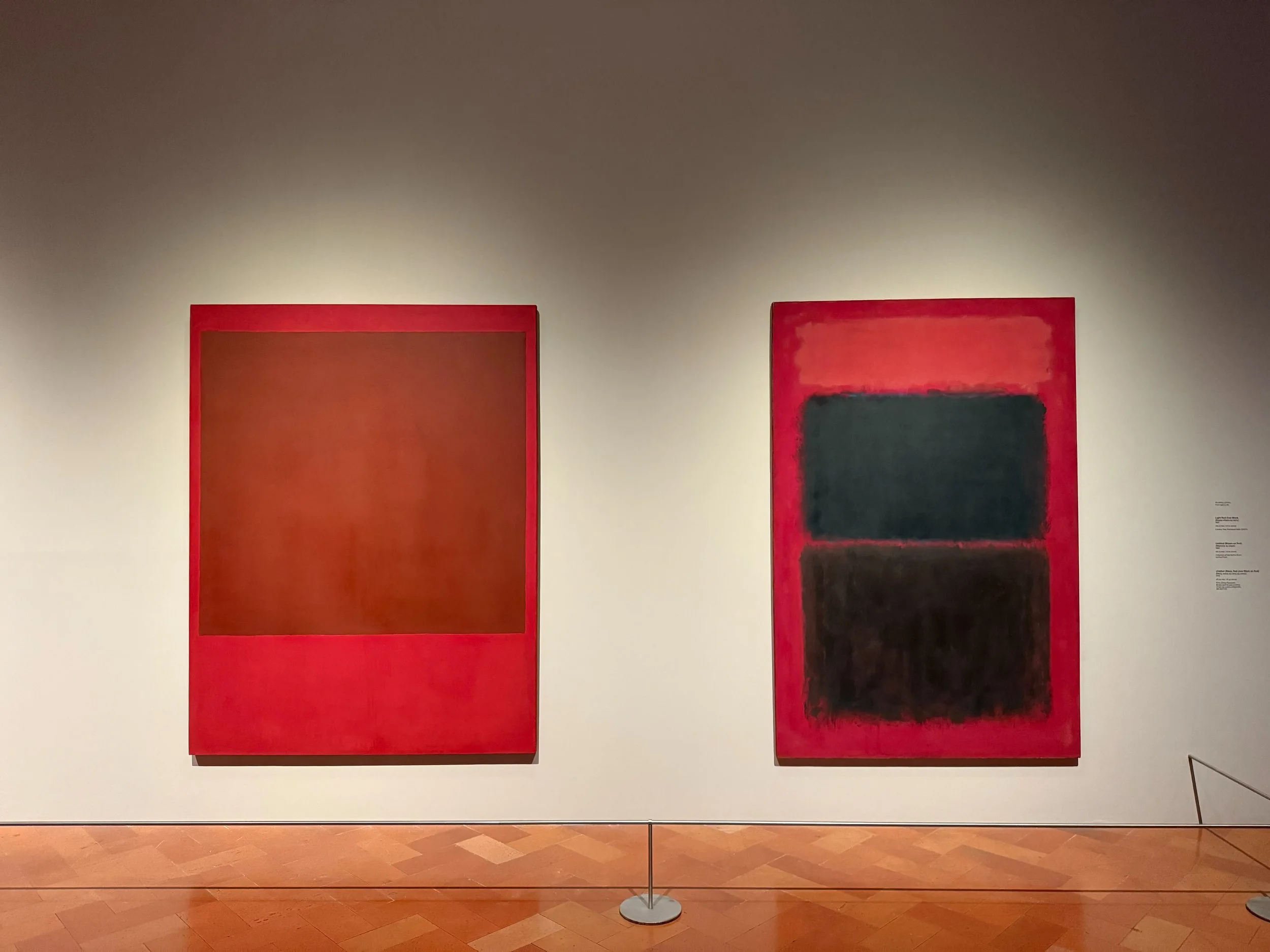
Rothko championed the reversal of set ideas when it came to paintings and figurative symbols to transmit emotions and messages. He emphasised that proposition was more important than necessarily showing something to transmit emotions and feelings.
Not only did he challenge the public, putting forth the idea that colour alone was enough to conjure emotions, he also went on to refer to his own work as a religious experience. How did he do this? In three simple ways:
Colour as subject matter - the choice of colour invigorating the same emotions that a Rembrandt would, the colours becoming the subjects.
Scale as an emotion - the enormous canvases he produced were meant for the viewer to become engulfed in them, so that their whole field of vision would only be the painting, the viewers are instructed to stand close to the paintings.
Spiritual dimension - exploration of a secular form of a religious experience rather than formal experimentation like a lot of modern art. This was clear at the opening of the Rothko chapel, a meditative space.
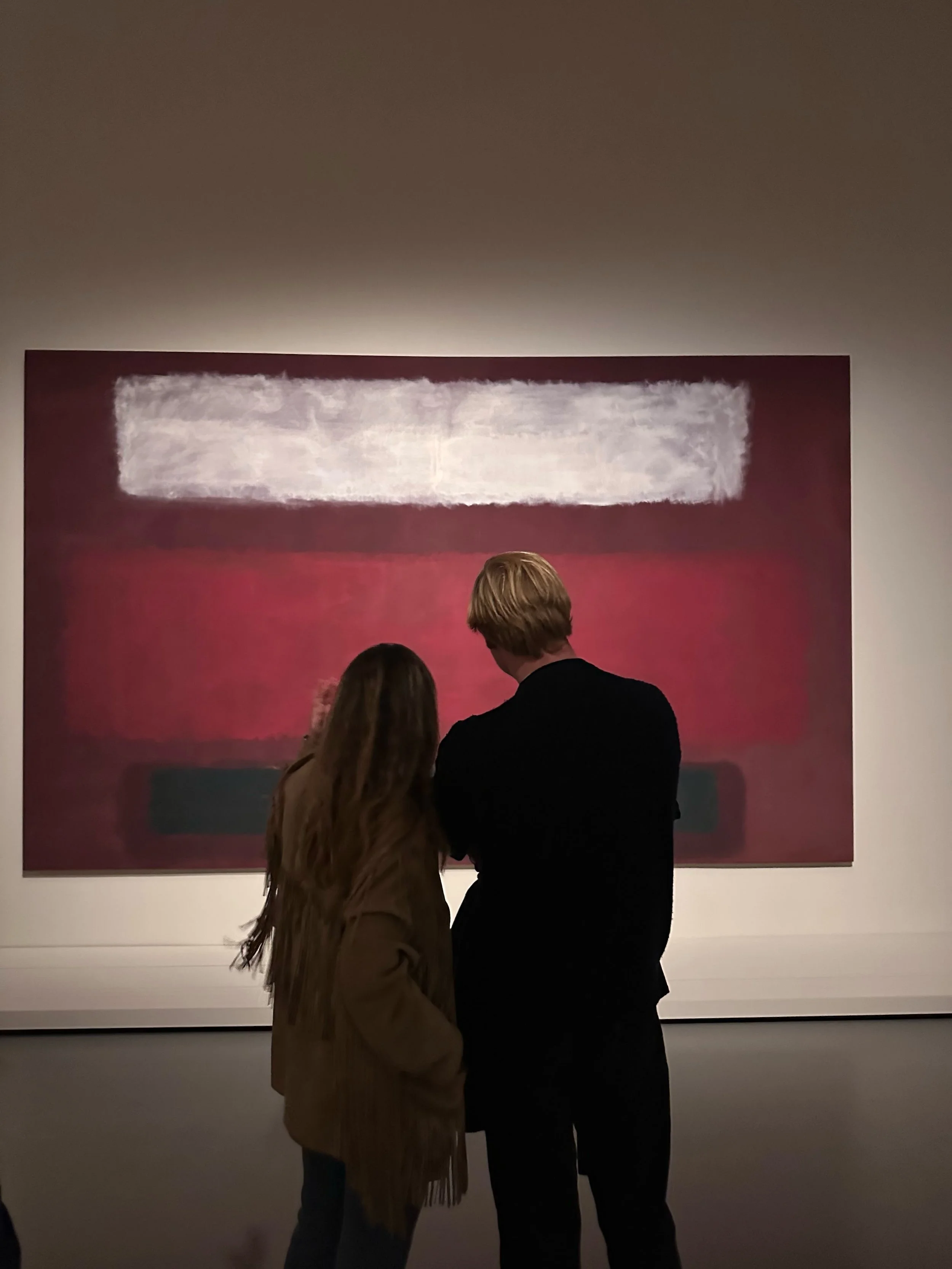
Rothko’s work was far from being religious in the traditional sense, yet it reaches religious grounds through the grandiosity of his canvases, the unapologetic size and bold colours juxtaposed.
The philosophical idea of the Sublime can be found to describe Rothko’s canvases.
The sublime is one of the most important ideas in a branch of philosophy called aesthetics. It refers to the human experience, beauty and art, contrary to Beauty that refers to the harmony and pleasantness of something. The Sublime is stronger than just a visual representation, it goes beyond and taps into the emotional part of each one of us, something so grand it brings out a cocktail of feelings such as awe, fear, humility alongside attraction they can collectively describe the term “Sublime”.
The origin of the Sublime comes from Longinus (1st Century AD), a greek philosophy critic, credited with the earliest intricate analysis of the Sublime. Longinus describes the term as “echo of the great soul”, art that elevates the human spirit and blooms a awakens feeling, where such art transports the viewer to another dimension of the being, beyond an ordinary and regular experience it resembles an out of body experience. Something greater than our physical self is involved which is where we can start to understand the tie between Rothko’s art and religious transcendence in an untraditional way.
Contrary to Rothko, renaissance art often created a pathway for the viewer to immerse oneself easily into something divine and greater than earth, greater than the being. As art modernised, religious figures disappeared, yet artists still looked for ways to transcend without obvious holy symbols and figures.
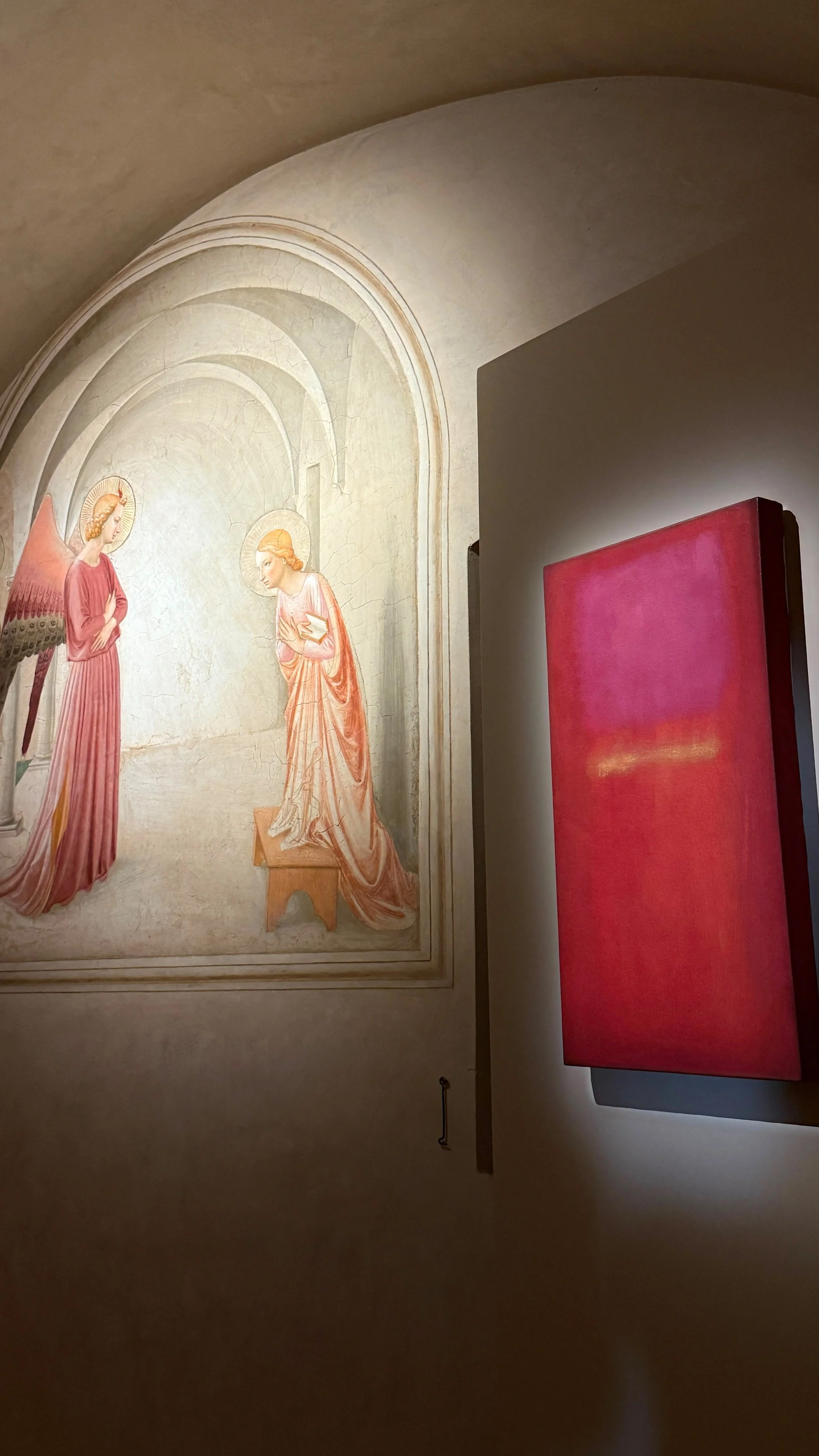
It was clear from standing in this monastery that my senses were being questioned whilst also feeling like they were restraining me from fully comprehending what was before me. The spiritual presence these enormous canvases emanated, mentally left me bewildered and in awe whilst physically, I stood there feeling small, my skin covered in goosebumps. Something I could not quite describe was happening, something I could not exactly grasp. My mind reached where my sense could not, I had reached a moment where my imagination, my logical senses were being pushed to the edge — The Sublime; instead of crumbling into non-sense under incomprehension, I experienced wonder standing in front of the violent vibrant reds of the canvases.
The dialogue between the Rothko and the Far Angelico’s frescoes was deafening, together they harmonised the air in which me, the viewer stood in front of. The century old art works and the modern abstract art lent themselves to the other resulting in a beautiful gentle dance. A perfect equilibrium was reached, the nerve raking dialogue suddenly unlocked, the code was broken and what seemed so unreachable was now inviting me to listen and participate. Standing there, in this loud silence I now understood why Rothko instructed his viewers to observe his paintings from close up and more importantly in utter quietness.
The exhibition no longer felt like a juxtaposition of century old art and modern abstract art but more like a natural discourse of artwork that were destined to be placed alongside each other. Just like a lock and key, Rothko and the Frescoes complete each other, both drawing from the other’s divinity.