"You Have to Say No to Get a Yes"
Photographer Luisa Pra Levis on walking away from the corporate track, the politics of picturing women, and why her best shoot ever took thirty minutes.
Luisa was, on paper, doing everything right. A degree in marketing management, a corporate job, a salary that paid the bills: the safe path, deliberately chosen — even though nearly everyone in her family has worked for themselves: her mother as a graphic designer, and her grandmother painting all her life, though never for a living.
Then, four years ago, a school friend asked her an innocent question over drinks “so, do you still do anything with photography?”, and the safe path started to come apart.
Last July she quit for good. Today she photographs from her studio in Basel and wherever the work takes her, from test shoots in Central Park to a beach in Portugal, making images that keep circling back to the same subject: women, freedom, and what it costs to claim either. She is warm, quick to laugh, and constitutionally incapable of small talk in the guarded sense (by her own admission, she could never be a spy).
Let’s start where everyone starts. Why do you do what you do?
Okay... big questions. Photography was always there for me, like an underline. Then my teens happened, I got into other things, and when I finished school I thought I’d do something with media or marketing. I studied marketing management, went down the business side of it. And then about four years ago I met up with some friends from school I hadn’t seen since, and one of them said, so, do you still do anything with photography? That was the moment everything clicked. It had been completely out of sight, out of mind: and that was a big wake-up call. I bought a new camera and got back into it, all on the side of my corporate job.
And at some point I realised: this is not doing it for me. I can’t sit in an office all day working on topics I’m not passionate about at all, by the end of the work week it honestly felt like torture. I only have this one life to live, and if I want to make it a good life, I have to do something I burn for. So last year, in July, I quit my corporate job and went all in on photography.
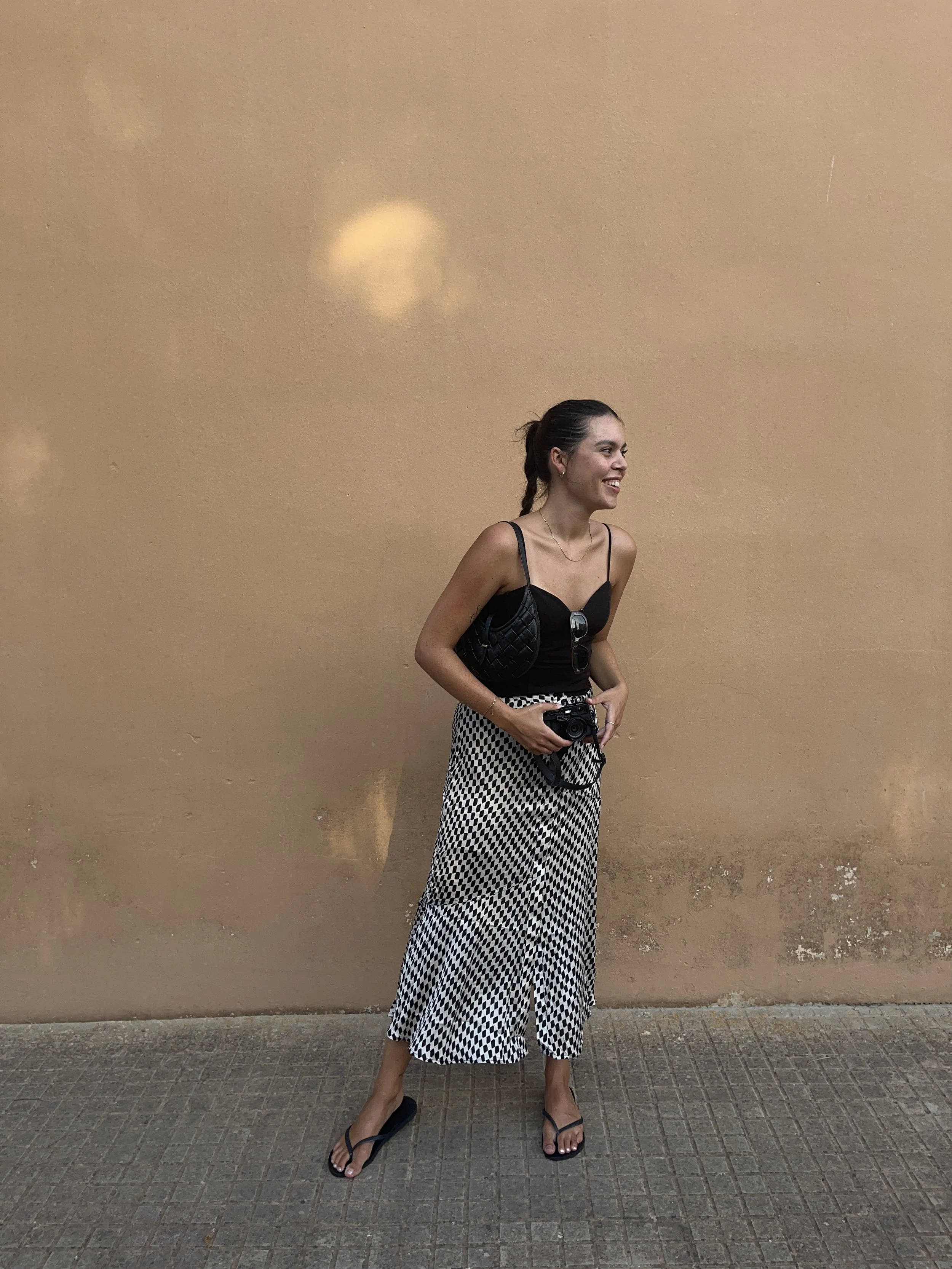
You grew up surrounded by creativity, your mother is a graphic designer, your grandmother painted her whole life. And you still chose the safe path first.
I did: creativity was completely normal in my house, it was everywhere.
And so was working for yourself: almost everyone in my family has been self-employed their entire lives. The thing is, only my mom actually built her career around creativity. My grandmother painted, yes (her whole life) but she never made a living from it.
So I grew up with this strong entrepreneurial spirit alongside the creativity, and I think I also learned that whole "playing it safe", risk-averse thing from them: which is probably where the tension comes from for me. I had seen all the struggles that come with being self-employed so closely: financially, mentally, trying to balance all of that while taking care of a child, of a family. Seeing that firsthand is probably why I initially chose the more conventional route. And it did pay the bills. But what I've learned is that if you have an artistic core, it's very hard not to follow it. If you don't, you just end up burying yourself in one job after another.
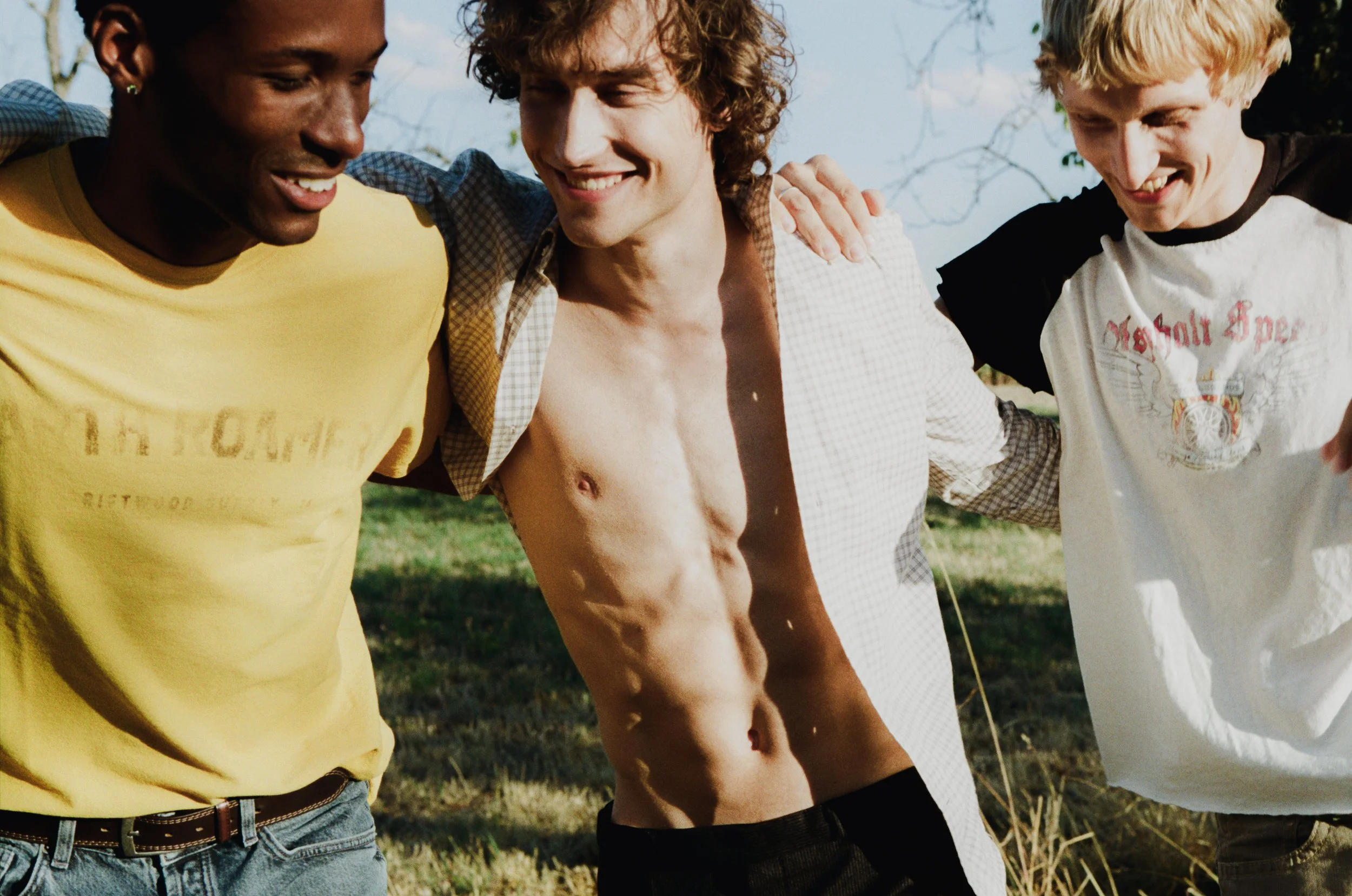
Photography by Luisa Pra Levis
Where does inspiration come from for you: from within, or from references?
It totally varies. There are times when I have ideas floating around everywhere and it all comes from myself, and other times I catch myself looking left and right at what campaigns the big brands are doing and going from there - which I don’t think is the best way to do it. It’s hard to always find the space and time to actually go into yourself and ask, okay, what inspires me?
What I’ve realised is that I’m a massive feminist. I love women.
A lot of my editorial work (the projects with a backstory) has been about freedom, about empowerment, about being a woman in this society. So it’s political, in a sense. And that’s one of the tricky parts of making a living as a photographer: sometimes you’re simply a service provider. A client books you for your aesthetic and your skills, but it’s hard to find time for the projects that are close to your heart: the ones that come from your own inspiration rather than from a mood board somebody sends you. It’s always a balancing act. In the end my inspiration comes from what happens around me, what happens politically, and from the women who inspire me in my daily life, women of all ages.
Would you turn down a job that doesn’t align with your values?
I don’t think I would ever take a job that clashes with my core values, morally. When you’re starting out, of course you do jobs where you don’t love the project or the product, that’s fine, you gain experience. But the thing I always say to my photographer friends is: you have to say no to be able to get a yes from the projects and clients you really want to work with. It’s about self-worth, I guess. Saying no is scary: this is what you live on, and you’re turning down money. But the more you say yes to things that aren’t aligned with where you want to go, the harder it gets to actually arrive there.
Do you have a favourite project? I’ll allow a top three.
Okay, a top three is easier. It’s funny, people assume the biggest, most exciting productions would be at the top of the list. But for me it was being in New York, doing all these random test shoots with models from the agencies. The one in Central Park was amazing: two super cool models, great chemistry. And I’d had this slight obsession with America since I was little, which is a weird thing to say in times like these, but we all grew up on American media. So standing in Central Park taking pictures, I was thinking, oh my god, am I really doing this?
And then last year I spent some time in Portugal and shot with two sisters by the beach. We had exactly thirty minutes to make it work, their train had been delayed, the stylist had to leave. We were rushing the whole time, and to this day those are my favourite pictures. They end up in my portfolio again and again. Sometimes the projects where you have only a tiny bit of time turn out the best.
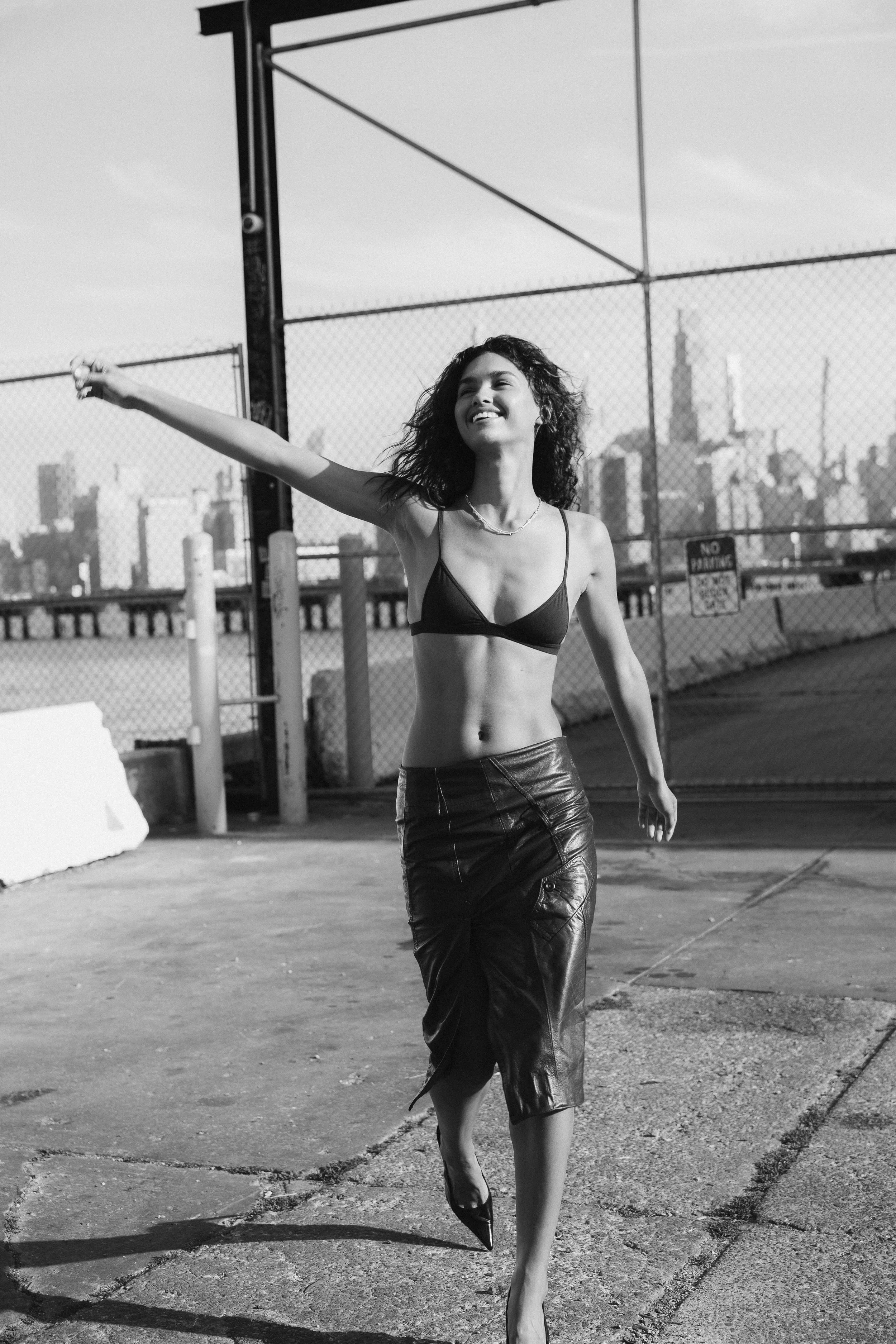
Photography by Luisa Pra Levis
When you photograph someone, does the connection between you and your subject change the picture?
I think it’s true, yes, though it depends on your personality as a photographer. I’m very sensitive; I pick up on the mood in a room immediately. When a model comes in and we’re not aligned, it gets harder for me to direct them, to get to the essence of them. And when the connection is good, everything just flows.
My main goal is always to make everyone comfortable on set, because I can tell from the finished pictures whether people were comfortable or not - always. A massive part of the job is really just talking to people, making sure they’re cared for, that there are drinks and food, that we can talk about their life and mine. It’s such an intimate process. I hate being photographed myself, I feel so vulnerable in front of a camera. Models are used to it, but I think what they actually get used to is being treated as an object, and that’s the one thing I refuse to do. They’re humans, not props.
You do seem like an open book.
I’m a very talkative, very open person: I’ll tell you my secrets, which is a problem. I could never be a spy. Sometimes I come home from a set thinking, was that too much? And then I think - no. That’s just me.
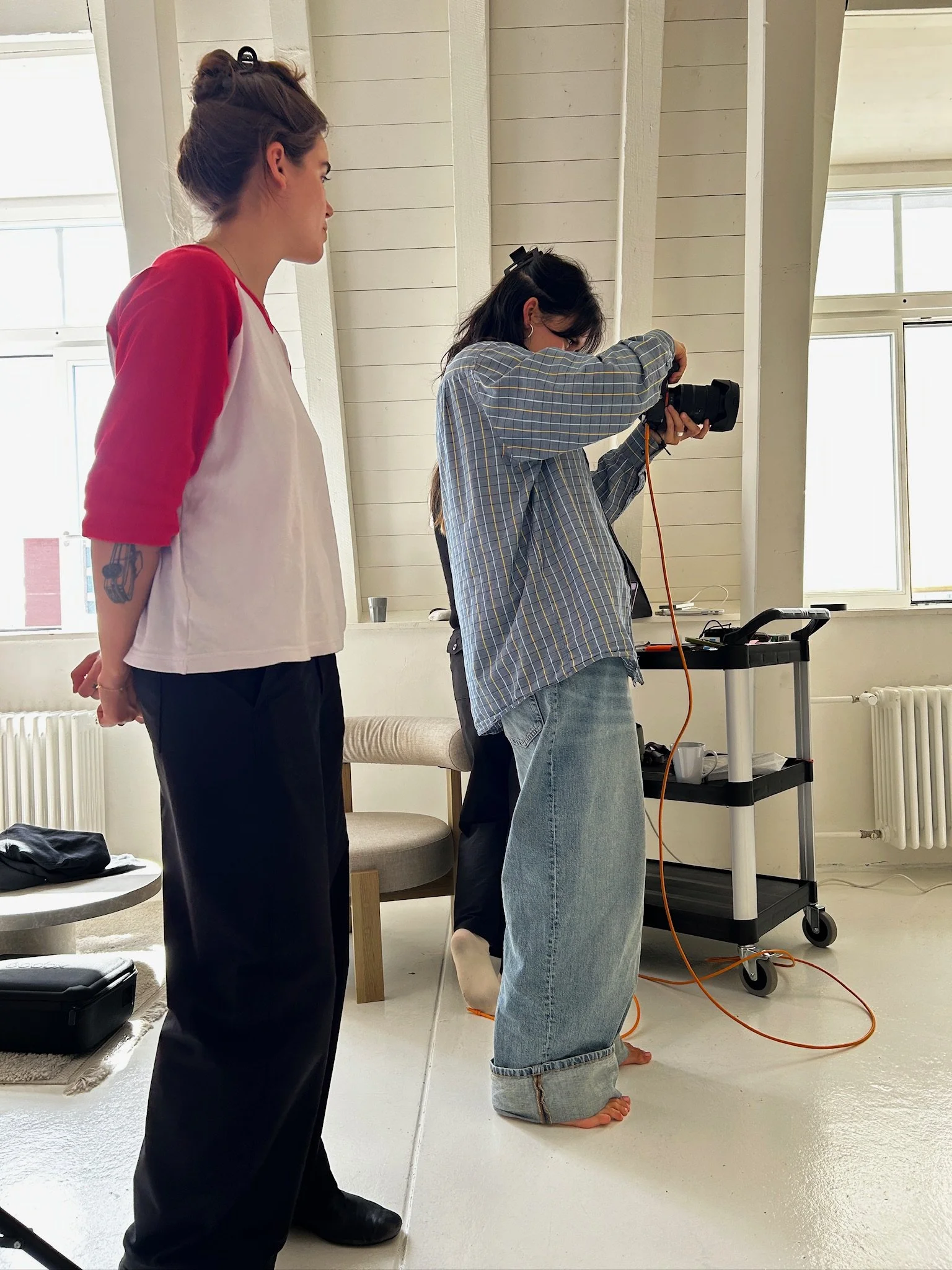
Walk me through a job, from the first email to the final image.
There are really two kinds of commercial sets. Either the brand reaches out (we have a collection to shoot, or a product we need pictures of) and you as the photographer take on the production side too: booking the studio, choosing the team, sometimes even the creative direction. You charge for that on top, because it’s a whole other job, but it’s nice - you get a lot of freedom. Or, with the big brands, everything is already figured out: they have their hair and make-up people, in-house stylists, an art director on set — and you just show up and take the picture.
Either way there are meetings first, you talk about deliverables and what you can bring, and then you shoot at their location or a studio - I have a studio here in Basel now, so I can also bring brands to me. Then comes the editing, which for me is the most excruciating part; it just takes so long. But on set, time flies. It’s long days and a lot of work, and I sometimes simply forget I’m working, which is amazing.
What does the rhythm of a year look like?
Summer is busy, maybe four to five big projects a month. Winter is much quieter and more scattered; that’s when I do the admin, the strategy, the website. And there’s a big thing I’m learning right now: work less, earn more. Which sounds so easy! When I started out I had no money behind me, so I just took on everything: a bit here, a bit there, a lot of work for very little money. Now I try to focus on fewer jobs that actually pay what the work is worth. It’s heading in a good direction, I’d say.
And the dream?
I always say I want to travel for work. I would love to get flown out to, I don’t know... Barbados, shoot a campaign there, and fly home again. More location shoots, and especially fashion, because outside of e-commerce (when you really get to do a campaign) you can still be so creative. I love that. And the other big dream is to get published in one of the big magazines. We’re working on that. We’ll see.
If you could talk to yourself a year ago - the week before you quit - what would you tell her?
That’s a good question.
I think I’d tell myself to let go more, and not cramp up trying to control every next step.
It’s going to develop the way it’s going to develop, you honestly can’t control that much. Focus on yourself, on getting better at what you do, on projects that are actually fun, on taking care of yourself... and everything will flow as it should. I’m a big believer in the universe; everyone has their path. I’m someone who loves control, and it only ever gets me stuck.
The other thing: talk to people.
This industry can get really lonely, especially as a freelancer working from home: that’s a part nobody talks about, and it can get to you. Talking to your peers shows you that everyone started with the same things. What you see on social media is the great jobs, the travel, the cool people: but behind that are the same struggles, the same worries, sometimes the same financial situation. And you can’t compare yourself to people your own age, maybe they started ten years ago and you don’t know it, or a friend got them connected right away. Don’t look left and right too much. It usually doesn’t do you any good.
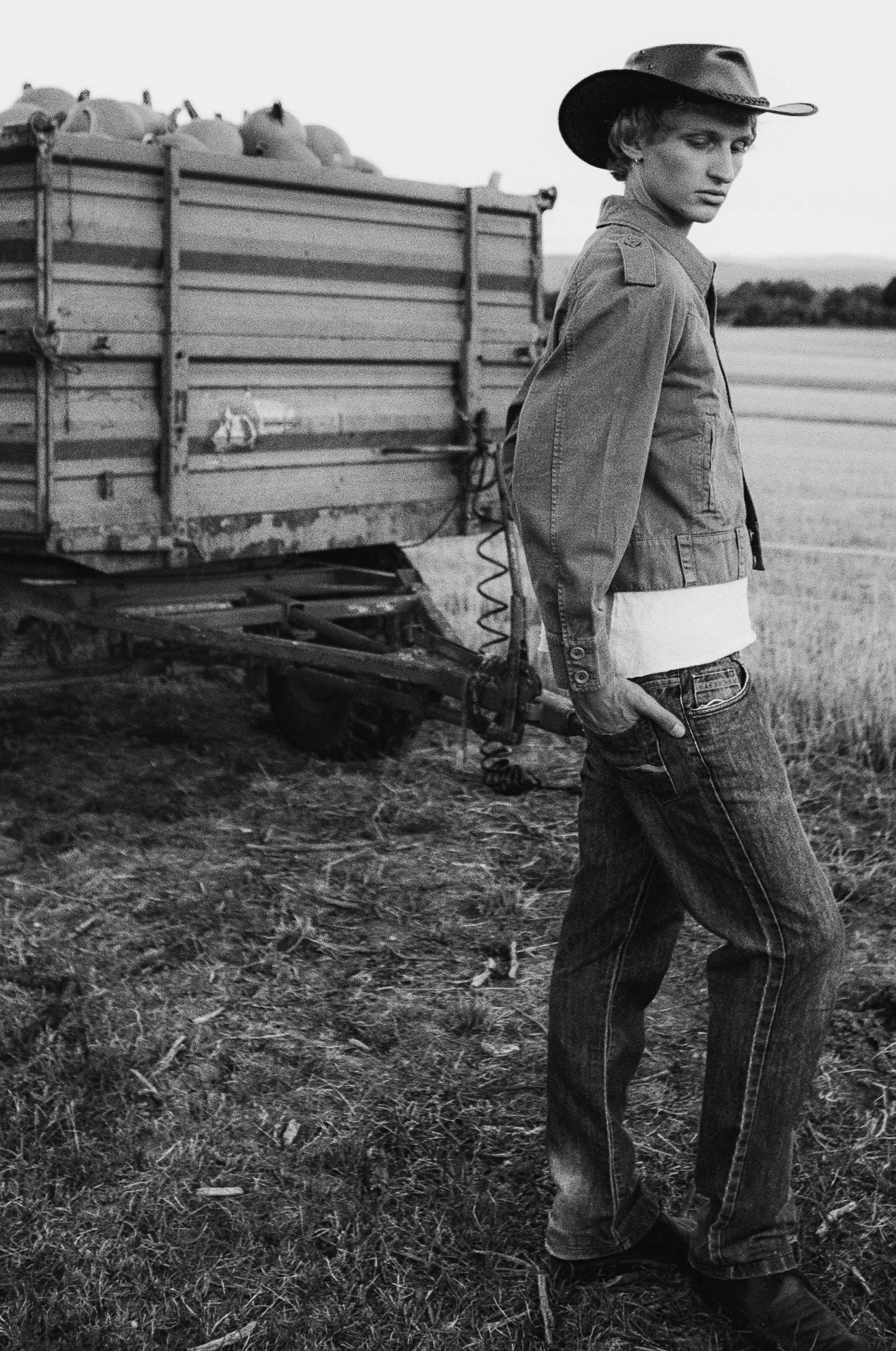
Photography by Luisa Pra Levis
“What you see on social media is the great jobs, the travel, the cool people: but behind that are the same struggles, the same worries.”
They say it takes a lifetime to become an overnight success.
Definitely. It can go fast for you, or it can’t - you just have to be patient with everything. And what I always tell my friends when they ask about the first year of freelancing full-time: it’s less operational work than you’d think, and so much more mental work. This whole journey has taught me an enormous amount about myself. Taking care of your mental health while you do it is the most important thing.