Sea, Pop & Sun: The Art of the Riviera
As everyone seems to be doing this year, it's euro-summer, and that means one of the essential destinations of the season, as always, is the South of France. So naturally I had to make a visit. Though I must say it was the most overcrowded and unchic version of it I have yet to live. So what to do when faced with such a dire predicament? One must escape to an island which deters many when faced with a body of water between them and their destination. Island of choice? A quick boat ride from the SoF, no passport needed – Porquerolles.
I discovered this island a few years ago, and was in awe of its beauty, landscapes, restaurants, shopping and cultural institutions. So when my friend told me she had gotten us tickets to Fondation Villa Carmignac’s current exhibition, I was ecstatic.
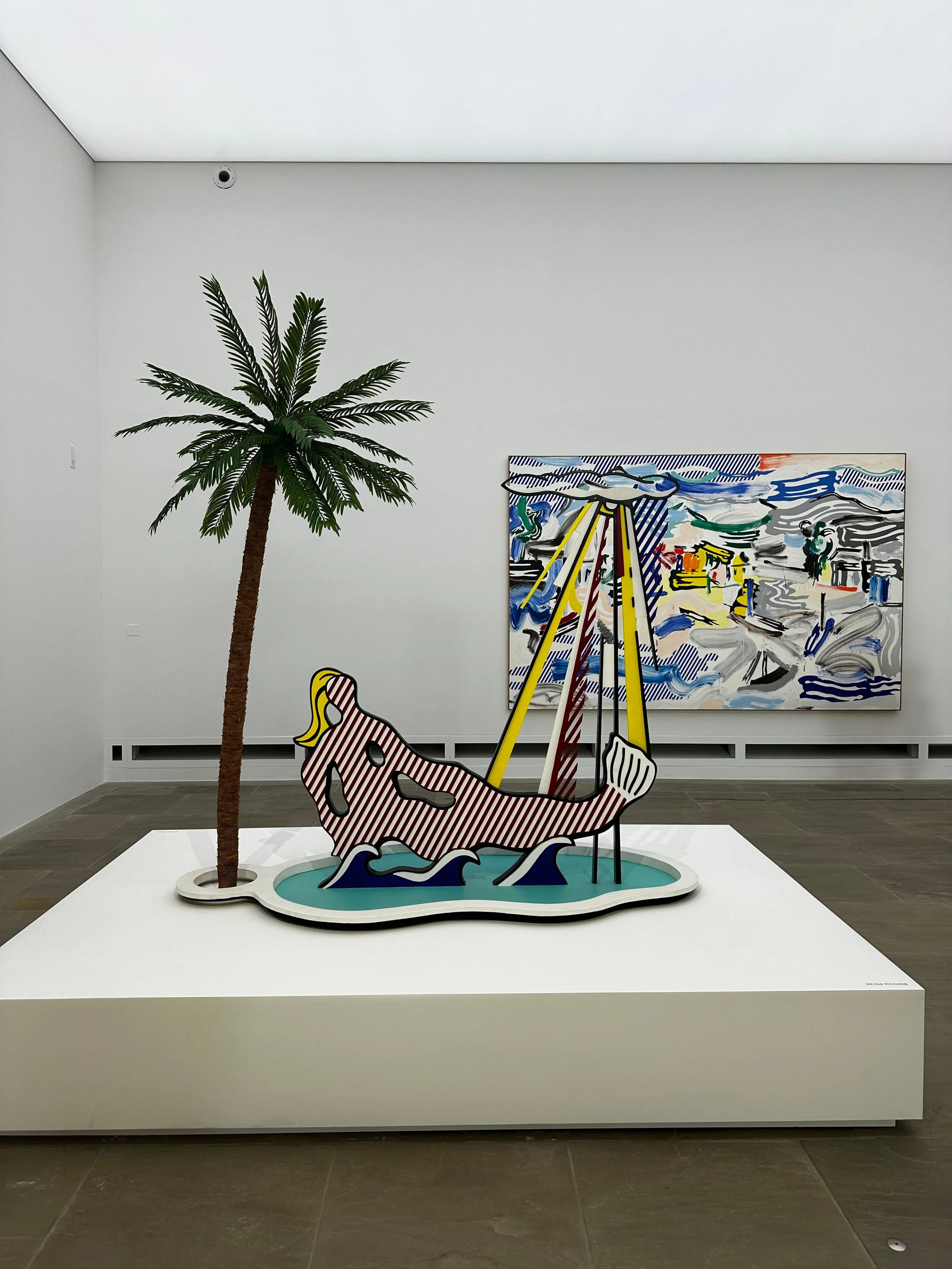
Villa Carmignac is one of the most breathtaking art foundations not only due to its secluded and extraordinarily preserved location, but also owing to its extensive one-of-a-kind art collection. Keeping with the theme of uniqueness, the foundation apparently has a rather niche requirement of removing one’s shoes upon entry. While I’m usually apprehensive of the command to remove my shoes, for fear of a chipped pedicure or holes in my socks… I cannot express what a freeing and refreshing feeling this was. For this particular exhibition, it couldn’t be more appropriate.
The exhibition titled “Sea, Pop & Sun” is an ode to the freedom that I felt exploring it. The title itself is a play on the French hit song of the 70s “Sea, Sex and Sun” by Serge Gainsbourg. This mélange of music and visual art remains a theme throughout the exhibition, with each room essentially having its own soundtrack of the best of ‘60s and ‘70s musical culture.
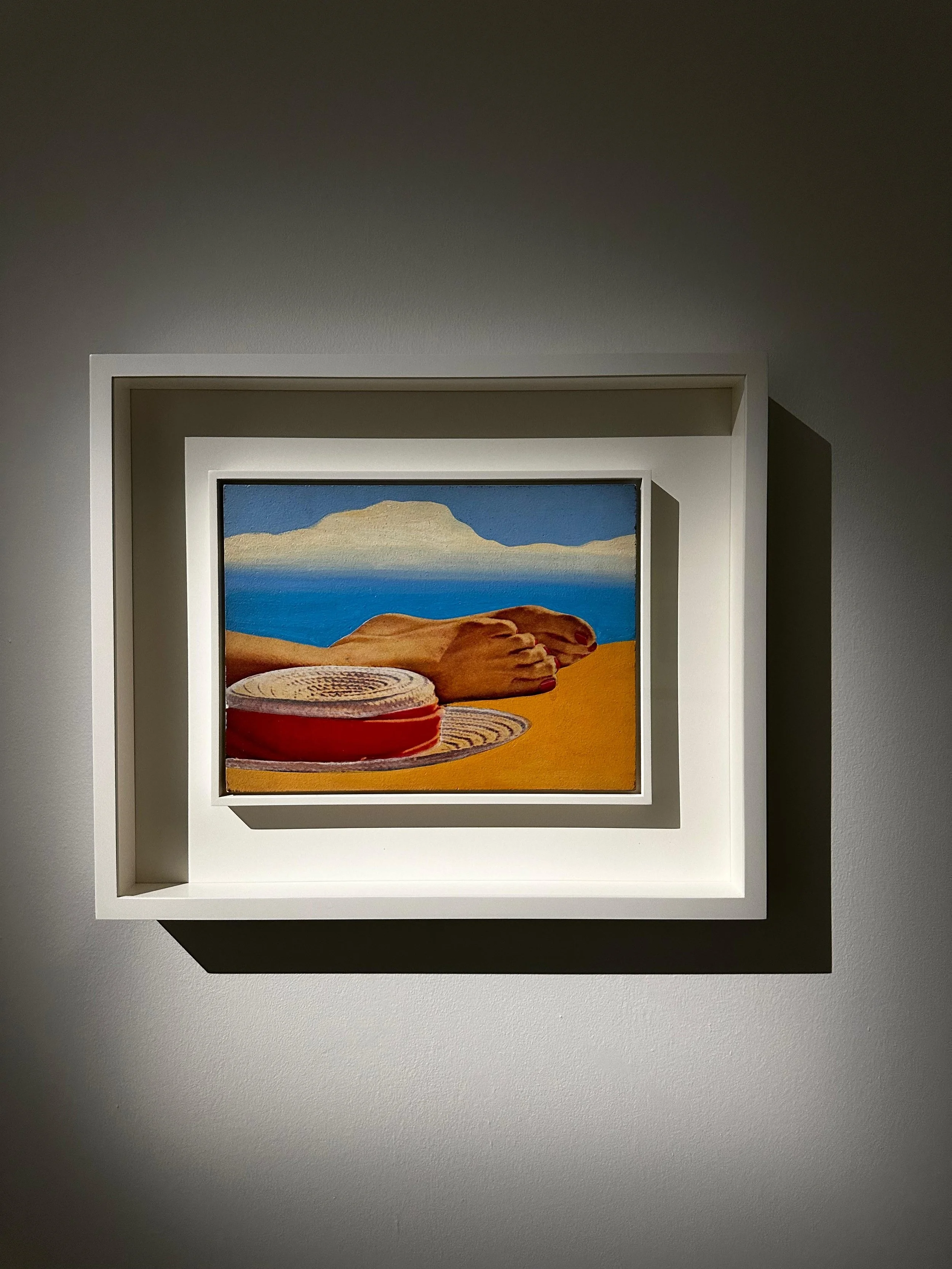
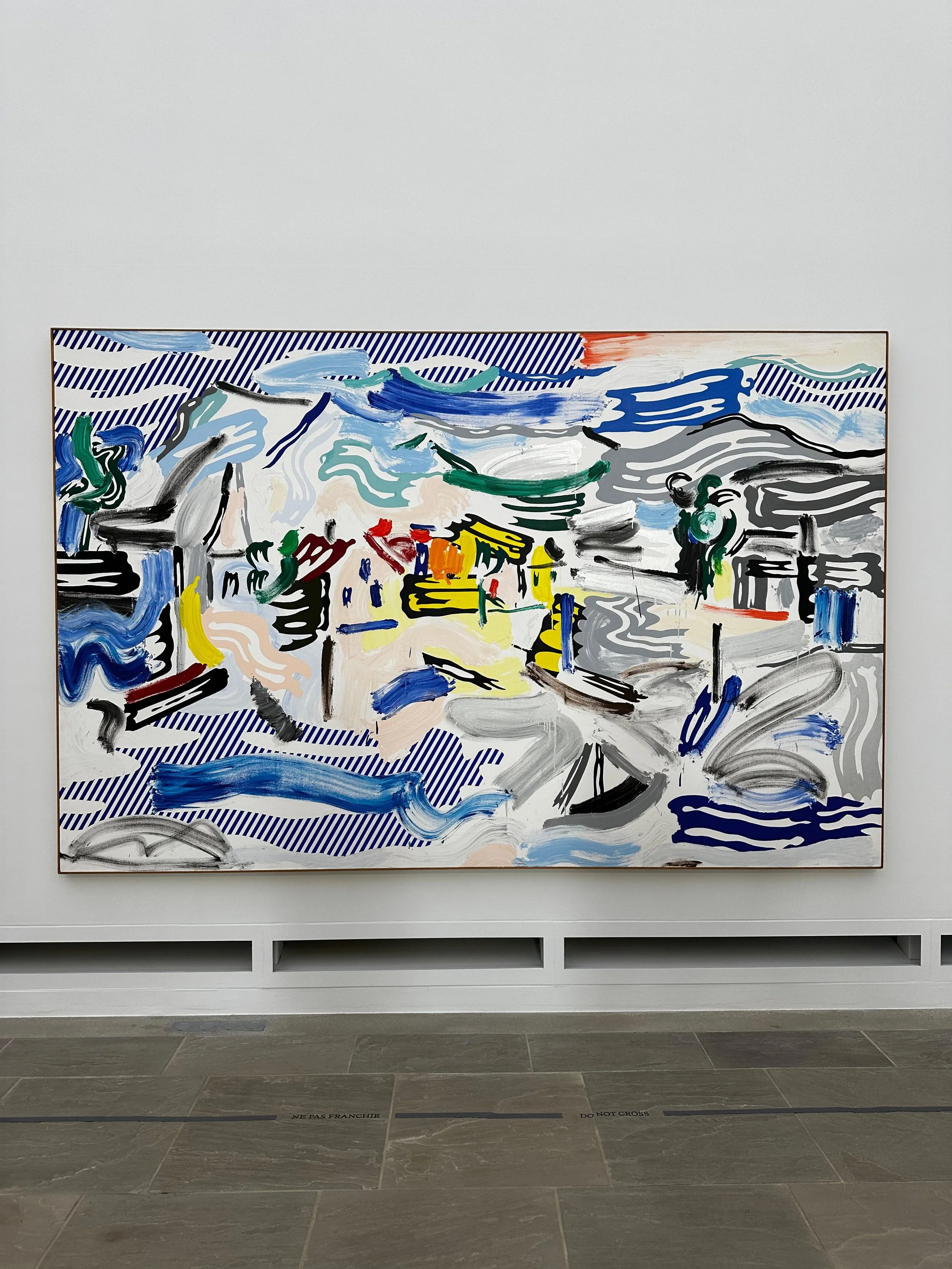
You can start to see why I felt so much freedom. Running around barefoot listening to the Beach Boys, I almost felt transported to the decades I never knew but somehow felt nostalgic for; dancing barefoot on a French Riviera beach in my bug-eyed turtle shell sunglasses, Missoni patterned sundress with trumpet sleeves, Brigitte Bardot on the next table over at Club 55. La belle vie. Well, I was as close to that vision as I was going to get, dancing barefoot, with some Ralph Lauren on, in the presence of the legacy of Andy Warhol and Roy Lichtenstein, to the sounds of California Dreamin’ in the background.
Now let's talk about the art. I couldn’t think of a better curation of pop art icons; Andy Warhol, Roy Lichtenstein, David Hockney, Keith Haring, Jeff Koons, Alex Katz, Marjorie Strider, Evelyne Axell, Martial Raysse… This mixed-media selection of paintings, sculptures, photographs, videos captures the essence of the movement to a T, embodying the collective state of mind and radiant joie de vivre of people subjected to the contradictory reality of the world at that time.
Artists were compelled to search for means of expression in a time of war, violence and uncertainty. The juxtaposition of such a sensual movement emerging from such a dark time brings to light the desperation many felt during those years. In the post-war world, young artists felt that the art they were seeing in galleries and museums no longer resonated with the lives they were living. And not feeling heard in a time when there was so much to say is a dangerous predicament. Some took to rioting, protesting, violence; others decided to become the harbingers of their future, with actions that resonate even today: they made art.
Richard Hamilton famously described Pop Art as “Popular, transient, expendable, low-cost, mass-produced, young, witty, sexy, gimmicky, glamorous, big business.” Read today, the list feels almost prophetic.
After the war, there was a major boom in manufacturing and media; advertising, cartoons, music, general popular imagery at large, and the rise of Hollywood. Now that’s something people could resonate with. By bringing mass-culture objects and media stars into the frame, Pop Art blurred the boundary between “high” art and popular culture, rejecting the idea of a cultural hierarchy. They recognized that our experience of the world is always mediated by images, objects and representations and sought to make those connections visible.
It is often said that pop art, being marked by collective trauma, like any good movement seems to be, is also very emotionally removed. Whether this detachment reflected an acceptance of the emerging world of mass culture, or a kind of shocked withdrawal from it remains a matter of debate. Some critics have interpreted the artists’ embrace of consumer imagery as an enthusiastic endorsement of capitalism and the commodities it produced, effectively giving mass-produced goods an even larger stage from which to circulate and seduce. Others, however, have seen something more critical at work: by elevating the everyday commodity to the status of high art, Pop artists drew a deliberate parallel between the commodity value of the objects they depicted and the status of the artwork itself, exposing the extent to which art, too, is ultimately a commodity.
I see it less as an embrace of the corporate mass-production world than as a way of reclaiming it. Artists such as Andy Warhol and Ed Ruscha came from backgrounds in illustration and graphic design, which taught them the elements that represented popular design. They took this uniform visual vocabulary and, through subtle but radical shifts in context, made it personal. Sure, one can argue that Campbell’s soup would never have achieved quite the same cultural visibility had Warhol not chosen it as his subject. But then again, I don’t personally think of Campbell’s or a big corporate product when I see those soup cans; I think of Warhol. The image has been so completely absorbed into his visual language that there is no mistaking it for the work of any other artist. In taking the most ubiquitous symbols of mass culture and making them unmistakably his own, Warhol turned something designed for everyone into something that could belong only to him.
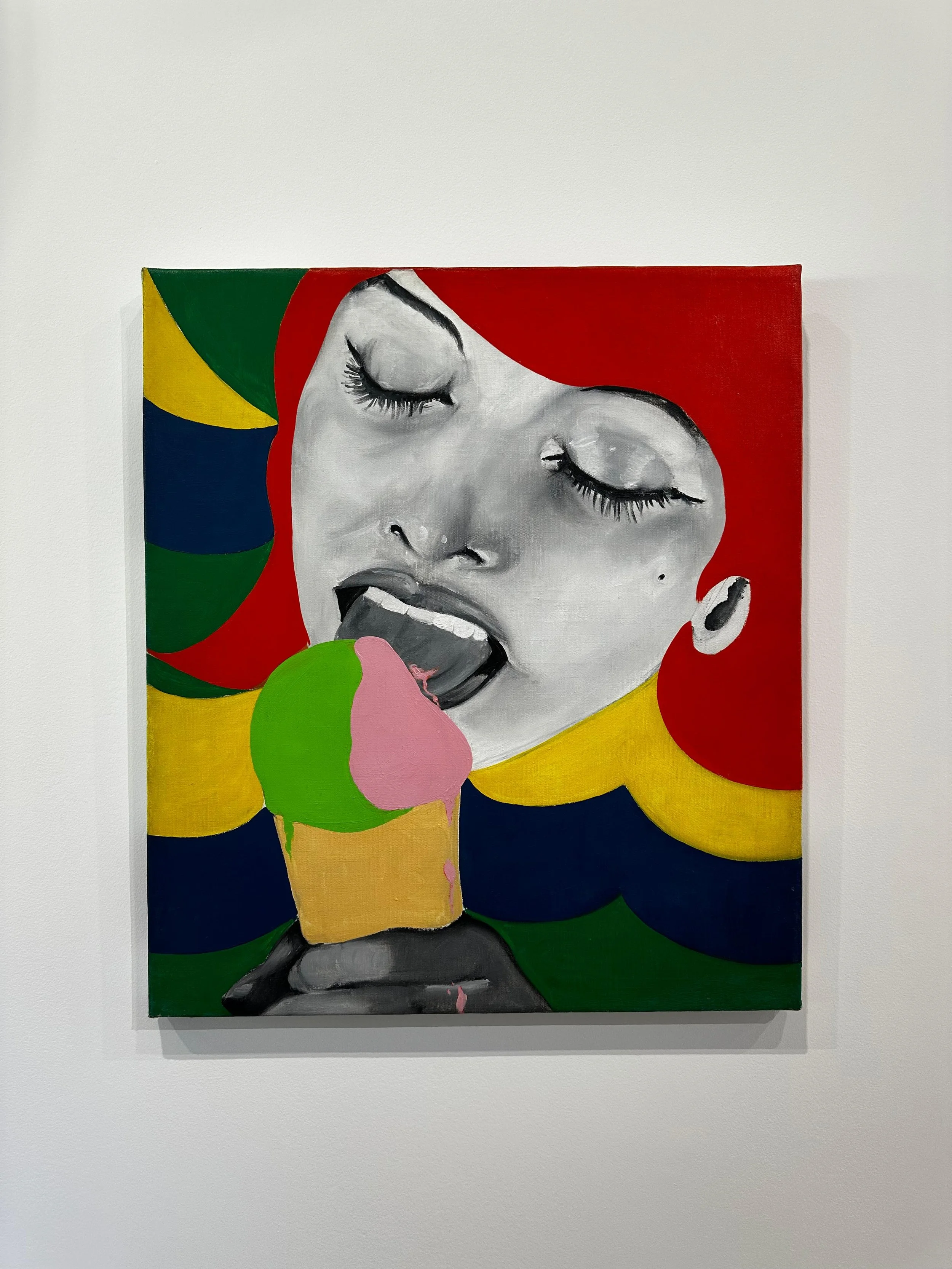
The exhibition creates an open dialogue between the most influential artists of the 60s and 70s and contemporary artists who remain fascinated by the movement and its protagonists, including the likes of Théo Mercier, Derrick Adams, Cosima von Bonin, and Judy Chicago. In our age of unprecedented media consumption, influencers and AI have made the landscape we inhabit even more saturated and commercially driven than the one that first gave rise to the movement. Pop Art resonates now more than ever. Images are no longer simply consumed; they are endlessly reproduced, circulated, manipulated and repurposed. In this sense, the questions Pop Art posed have not disappeared; they have multiplied.
The exhibition will be on until November this year, so if you’re passing through the South of France, I urge you to hop on a ferry or rent a boat to head to this expo, and make a day of it! Rest assured that Lesley Gore’s “You Don’t Own Me” will be the soundtrack to the rest of your trip.