In conversation with Edmond Antoine Awad
Socrates famously claimed that the only thing he knew was that he knew nothing. A couple of millennia later, we're still having trouble accepting it.
On a Thursday evening, I meet Edmond Awad at a café near my office to discuss The Certainty of Ignorance, a book that takes this uncomfortable idea rather seriously.
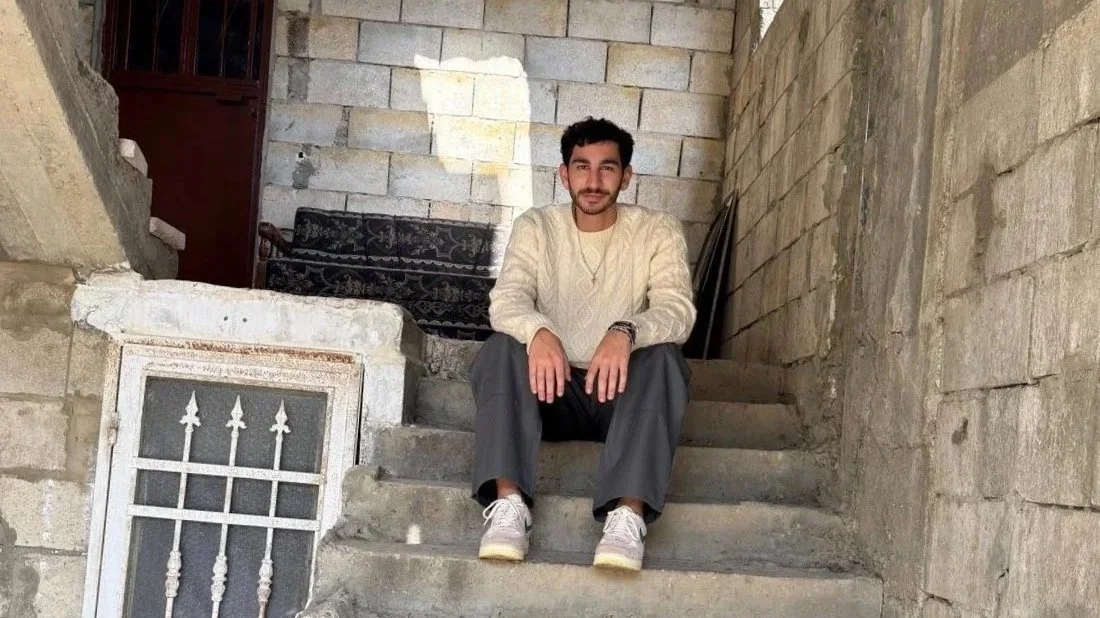
At 23, Edmond is a writer, an artist and a philosopher, although he doesn't particularly like any of those labels. Ask him who he is, and he'll simply tell you he's a human being - a rather straightforward answer from someone who spends so much time questioning things.
We've met briefly before, but never properly spoken. Edmond's calm is immediately striking. He listens with such steady attention that, despite being the interviewer, I occasionally feel like the subject of the conversation.
And that same tendency to question things is reflected in his book, which challenges our relentless search for certainty and asks why we're so determined to find meaning, maintain control and figure out happiness.
And so, rather ironically, we begin by asking questions.
When did you first become interested in philosophy? Was there a particular moment that sparked your curiosity?
When I moved to Singapore. I was living on my own, so I found myself reading and writing a lot more. Eventually, I started getting interested in philosophy.
I started with Kafka, The Trial, and from there I just kept reading one book after another.
The interesting thing is that I was already writing before discovering philosophy. Suddenly, I started recognising things in what I was reading that corresponded to feelings I'd had as a child. Back then, those feelings were more innocent, less structured. Philosophy helped me understand what they actually meant.
I've always been very introspective. I observe things, I ask questions. I guess I was drawn to philosophy before I even knew it.
You've written a philosophy book at an age when most people are still figuring out what they want to do with their lives. How did your personal reflections eventually become a book?
I've been writing in my phone notes since 2019. At first, it was almost like a diary. I'd write down dates, names, specific places, things that had happened and how I felt about them.
Over time, my writing became less personal and more reflective. Instead of just describing what had happened to me, I started asking what those experiences revealed about society and the way we see each other.
Last summer, while I was looking for work, I decided to reread everything I'd written. And I started noticing connections I hadn't realised were there. I'd written something in 2019, and then, three years later, after a completely different experience, I'd find myself reflecting on essentially the same question.
So I began organising everything into themes. Those themes eventually became chapters. And one day, I just casually told my parents, "Yeah, I wrote a book."
Did you rewrite much of it?
I really didn't want to change too much. Of course, there were things I had to adjust for clarity, and the book needed some kind of structure.
But I wanted it to be vulnerable, to be raw. If you're asking people to open up, but you're only willing to reveal half of what you actually think or feel, then you're not really being truthful.
There are things I wrote three or four years ago that I might not agree with today. But that's how I thought at the time, and I think there's value in preserving that.
If you still think exactly the same way you did when you were sixteen, then something's probably wrong.
Let's talk about the title, The Certainty of Ignorance. It's almost a contradiction in itself. What does it mean to you?
I spent quite a while trying to find the right title. The book touches on so many different subjects, and I wanted something that could bring everything together.
But every time I settled on something, I immediately started questioning it. I know myself. I knew that the moment I chose a title, I'd probably think, "Shit, I wish I'd chosen something else."
And then I realised that the one thing I was absolutely certain of was that I didn't know.
Throughout the book, I'm constantly questioning my own thoughts. Even when I make a statement, I'm never claiming that it's necessarily true.
I'm not here to teach anyone anything. I don't know more than the person reading my book. I'm simply sharing what I think, while acknowledging that I might be wrong.
Would you ever want to teach, though?
I don't know. That's a good question. What I really enjoy is having conversations like this. I'm not necessarily teaching you anything, but we're exchanging ideas, and it's interesting for both of us.
Your book brings together reflections written over several years. Have you reread it since publishing it?
Since I published it, I haven't touched it. I spent so much time writing and editing everything myself that once it was finished, I just moved on.
And now that I know people have actually read it, it's strange to go back to it. I read something and think, "Shit, all these people have read this."
But how much do you think you've changed since you started writing it? Is there something at your core that has remained the same?
I've changed a lot. Even while writing the book, my thoughts were already evolving. Sometimes I'd come back to the same subject with a different perspective, even contradicting what I'd previously said.
The questions I had back then are often the same questions I have now. I still don't have the answers. But I've matured, I've experienced different things, and that changes the way I approach them.
I don't really feel like I'm one fixed thing. I actually like changing.
I like being detached. If there's something I no longer want to do, I want to be able to move on. Maybe that's the one thing that stays consistent about me.
I don't get particularly attached to one experience, one person or one place. I feel like I could move anywhere and simply live there.
Would you say you're someone who thinks more with your head than your heart?
Definitely. I think I'm more rational than emotional. But I think you need a balance. I'm probably a little too rational, and I'd like to be more in touch with the other side.
There's something I've been wanting to ask you. Your book often strikes me as quite pessimistic, yet you repeatedly come back to this idea of "who cares?" How do you reconcile those two attitudes?
I think it's because I usually write when I'm unhappy.
When I'm happy, I'm doing things that make me happy. I'm living in the moment, so I don't feel the need to write about it.
But when I'm frustrated, upset, or something is bothering me, I write. It's a way of externalising those feelings.
But doesn't that mean the book represents only one side of you, rather than who you are as a whole?
That's interesting. But I don't like forcing myself to create something when I don't feel like it.
People often ask whether I'm going to publish a second book. And my answer is always that if I happen to write enough material to make another book, then sure, why not?
But I don't like the idea of sitting down and deciding, "Okay, now I'm going to write a book." I prefer letting things develop on their own.
Throughout the book, you return to the idea of how insignificant we are in the grand scheme of things. Doesn't that unsettle you?
I like to think about it this way: the energy that makes you exist was already there before you were born, and it will continue to exist after you die. So during your lifetime, you have the opportunity to use that energy, but it's not really yours. You're part of something much bigger.
How do we know there aren't millions of other planets with humans, or other forms of life? We don't. And we'll probably never know.
We think we're incredibly important because we only see things from our own perspective. But think about an ant. It doesn't know about countries or the rest of the world. Its entire reality is limited to what it experiences.
Maybe we're not that different.
And honestly, I'd be more scared if we were the only ones. Imagine how enormous the universe is, and then imagine that we're the only living beings in it. To me, that's much scarier.
As our conversation comes to an end, one thing becomes clear. Edmond isn't particularly interested in having the final word: his ideas evolve, his opinions change, and he seems quite comfortable with the possibility of contradicting his earlier beliefs.
What I find interesting is that Edmond doesn't seem to regard his earlier opinions as mistakes that need correcting, they're simply what he thought at the time. Reading his book means following that process, including the contradictions, the unanswered questions and the ideas he might no longer agree with.
For those curious to explore Edmond's reflections further, The Certainty of Ignorance is available on Amazon, and you can keep up with his latest writing on his personal Substack, @edmonda23.