A conversation with Lal Demir
There are eyes that simply look at the world, and then there are those that are determined to understand it. Eyes that observe, question, and search for meaning in what others might overlook. When I first meet Lal Demir over a video call, I can immediately tell there's something particularly striking about her: she is attentive, curious, almost analytical, as though she's trying to understand not only what you're saying, but what's behind it.
So when Lal begins telling me how she became an artist, my first impression was confirmed.
Unlike many artists whose passion began in childhood, Lal's journey into painting started with a desire to understand art itself. She was so fascinated by the way artists see the world that she eventually decided the best way to understand their minds was to become one of them.
At just 25, Lal has already exhibited her work in art capitals such as Paris and Amsterdam, as well as held a solo exhibition in Ankara. Having lived in different countries, she has developed an international perspective, yet her Turkish roots remain central to her artistic identity. The unspoken traditions of her home country, its cultural complexities and its particular ways of expressing emotion continue to shape her work.
Our conversation took us through the discovery of her artistic voice, the influence of cultural identity, the complicated relationship between social media and personal taste, and the importance of giving ourselves the freedom to explore.
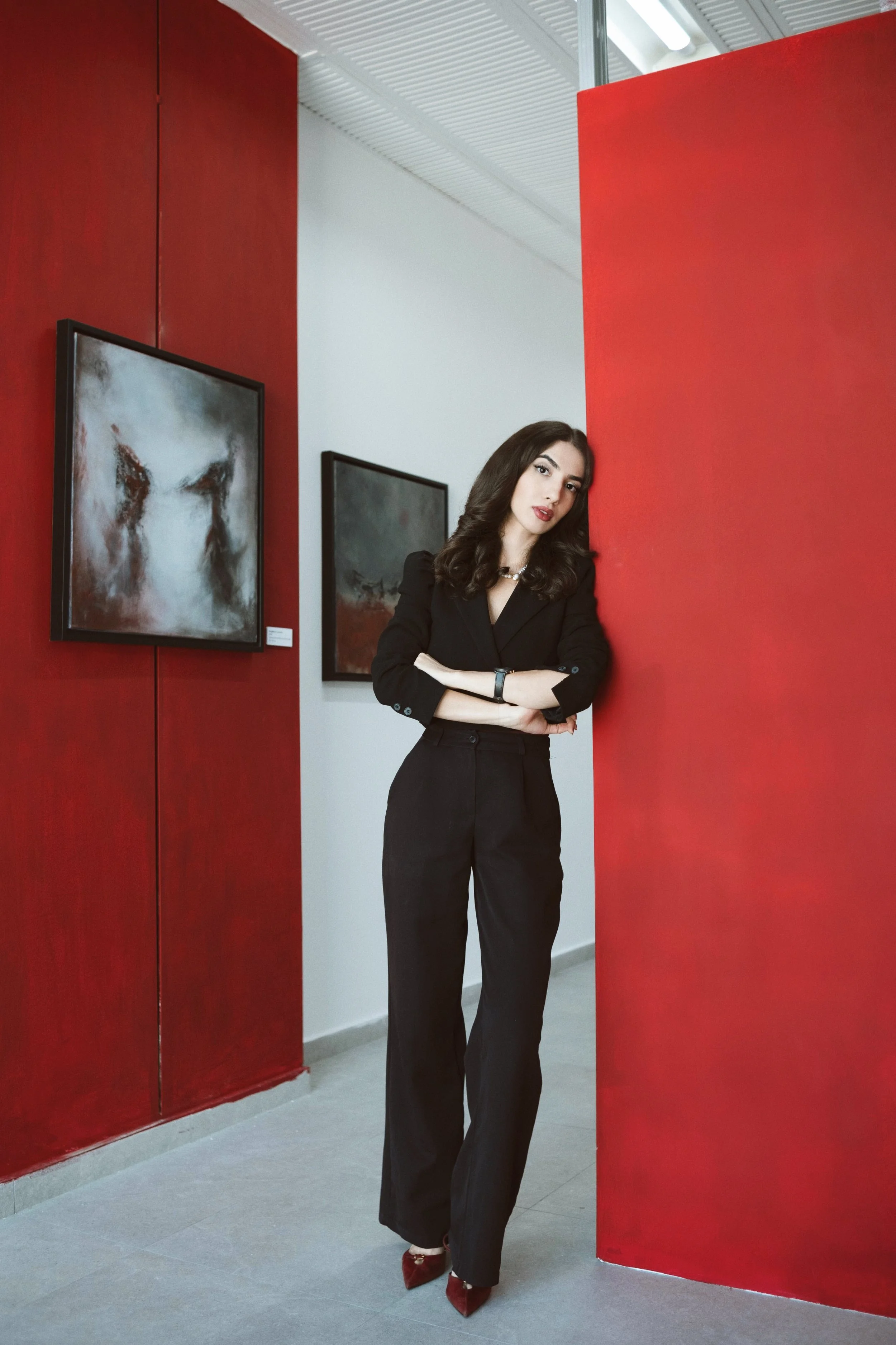
Have you been painting your whole life, or is this something you discovered more recently?
My story with painting actually began when I was living in Brussels, from the age of 19 to 20. I was attending KU Leuven, which is a very demanding university, and it was during COVID, so it was quite a difficult and depressing period. I decided to use that time to visit museums, especially when nobody else was around, and I became increasingly interested in art.I started wondering how artists become masters.
“What defines good art? What makes an artist revolutionary?”
Take Pierre Soulages, for example. He does something that might seem so simple, yet he is considered revolutionary. Before him, there was Caravaggio, who was revolutionary in an entirely different way. I became fascinated by what distinguishes a truly remarkable work of art.
Initially, I thought I would approach this from an intellectual perspective. I wanted to understand the academic and theoretical side of art, the way artists think and the way they see the world. But then I had to return to Turkey because of the third wave of COVID, and I found myself struggling again. I was very emotional, and I didn't want to be there. I needed a way to cope witheverything I was feeling.
So I thought that if I really wanted to understand what makes art good, I needed to make it myself. I wanted to understand the artist's mind and their way of seeing.
John Berger's Ways of Seeing was particularly influential to me. I wanted to experience that perspective from within.
I turned an entire room into a studio, removing everything from it, and simply started painting. I had drawn before, but painting was something entirely different. It is very difficult to approach because of the perspectives, light and dark, contrast, values and composition. I think you need a good design background to become particularly good at abstract painting.
For the first one or two years, my work was honestly quite bad. But personally, I have this need to be good at something when I set my mind to it. So I thought, okay, how can I become good at this? I had already started, and I was already visiting exhibitions, so I wanted to take it seriously.
I sought feedback from well-known artists and art professors in Turkey. I would literally go to their university classes, sit in the classroom and ask them what they thought of my work. They gave me very honest, sometimes brutal feedback, which helped me reshape my approach. By studying and following some of the greatest abstract artists throughout history, and learning from them, I gradually developed my own style.
And that's how we got here.
I find that such an interesting way of entering the art world. Because so often people are ashamed of the fact that what they do now, hasn’t been what they have dreamt of ever since they can remember. But the way you explain it, that rather than having painted since childhood, you were so fascinated by looking at art that you decided the best way to understand it was to become an artist yourself. You were so curious to understand the artist’s mind that you decided…
I’m going to become one of them.
You're still in your twenties, yet you've already exhibited your work in Paris and Amsterdam, and most recently held a solo exhibition in Ankara. What has been the most rewarding part of this journey?
I think the most rewarding experience has been the solo exhibition, because it is such a confirmation of your identity in the art world. Everybody wants to do it, but when you actually get to create something entirely through your own vision, with your own team and ideas, and then see it come to life, there is something incredibly rewarding about that.
The exhibition ran for 40 days, and around 95% of the artworks sold. Seeing something that existed only in your head become a physical exhibition, and seeing it received so positively, was an amazing feeling.
The other exhibitions were also very rewarding. My first real recognition came when I was invited to join the European Turkish Contemporary Artists Collective. There are around 50 artists in the collective, many of whom are established artists, art professors and masters who have been working for decades. Being invited to exhibit alongside them and become part of that collective was a very special moment for me.
I think recognition can mean something different to everyone. For one artist, success might be the number of paintings sold at an exhibition; for another, it might be one particular person connecting with their work. Everybody has a different definition of what makes their work successful.
Exactly. I wouldn't want to be entirely focused on recognition.
But if I had to define success very specifically, I would say that I simply want to have the luxury to keep going.
If I constantly think about the financial aspects, about whether I am going to sell a painting or not, the work is no longer going to be the same.
At this stage of my life, success means having the freedom to keep reinventing myself, trying new things and creating authentic work that maintains its individuality, rather than making something simply to be admired by the art world. For me, that luxury is being able to focus entirely on creating without constantly worrying about other aspects of life, which, in your twenties, really is a luxury.
DEPLÜME: That’s true. As soon as we start thinking that we're doing something purely for the money, it takes away most of the fun and the original reason we usually start things.
Exactly. It also takes away from the quality of the work. Of course, you need money in the end, and that is part of being an artist. Some established artists can sell their paintings for €100,000 and essentially secure themselves financially for a year, allowing them to focus on their work. That's something I hope to achieve eventually, but it is still a long way ahead of me. My definition of success has also changed as I've grown creatively. Before, being visible mattered a lot to me. But after making so many paintings and discarding quite a few while selecting the works for my solo exhibition, I realised how rare it actually is to create something of real quality.
Now, success to me means quality over quantity. It means gradually developing the understanding and experience to achieve that quality with less trial and error, while, of course, still enjoying the process.
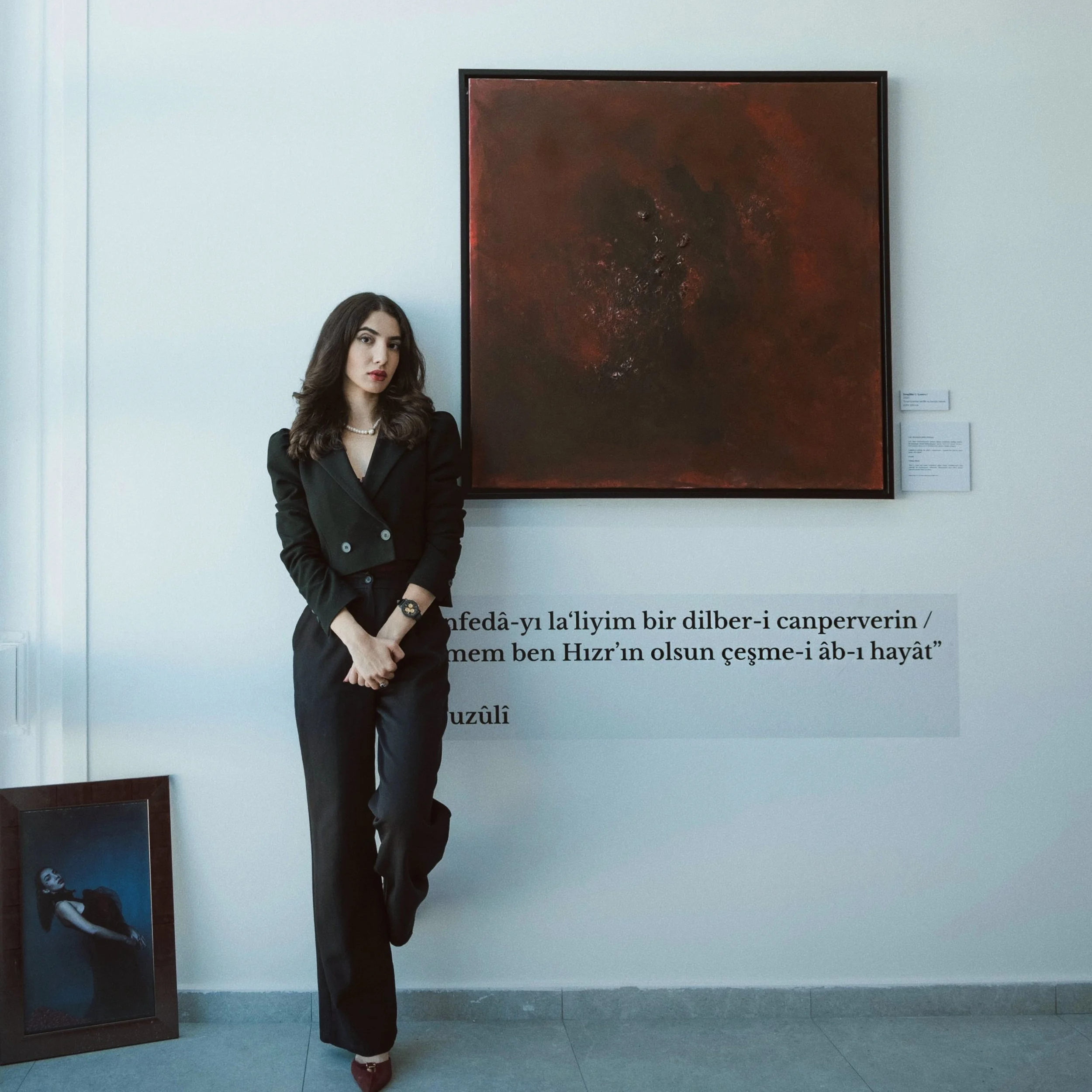
DEPLÜME: We'd love to understand a little more about your relationship with Turkish culture. How has your heritage influenced the way you approach your work?
I think it has influenced me dramatically. Having lived in Brussels when I was younger, and now living in the Netherlands, I have also developed an international perspective. At the same time, I'm not particularly drawn to some of the more traditional Islamic and Turkish cultural norms. I often find myself wanting to break them.
But I think there is a very particular indirectness in Turkish culture. We don't necessarily say things directly. We try to be polite, or we communicate in a much more “mysterious” way, especially when it comes to communicating our feelings. I think this idea of hiding and revealing, of concealing something and then allowing certain parts of it to show, is at the very core of my abstract art.
In my experience, that indirectness is reflected in the way people respond to art, too. Abstract art can offer a way of communicating something without showing it explicitly. There are certain subjects that might be more difficult to approach directly within a traditional cultural or religious context, but abstraction allows you to explore them differently.
DEPLÜME: Do you think your cultural background has shaped the way you naturally gravitate towards abstraction?
Yes, I think that cultural background influences the way I approach painting, even when I'm not consciously thinking about it.
If I were Dutch, for example, perhaps I would be more inclined to paint slightly deformed figures of a nude woman, still showing something recognisable from reality. But my way of approaching things is much more abstract. I think I naturally have a tendency to move towards more symbolic and complex forms, which is also why I use so many layers in my work.
DEPLÜME: Is the layering something you approach deliberately, or does it happen more intuitively as you work?
Sometimes I do it very intentionally. For example, if I want a painting to have a sense of history, almost like an old parchment paper that has been worn down, scraped and used over time, I need to build those layers deliberately. I might use Indian ink or different pigments to create stains and textures.
Otherwise, I simply like the feeling of a lived surface. We have a word for it in Turkish, something that describes a surface that has been used and has accumulated a history. Sometimes I create that feeling intuitively, because the painting develops its own history as I work on it.
DEPLÜME: Beyond the visual influences, are there other art forms or cultural references that find their way into your work?
Another important influence comes from Turkish literature. Ottoman Divan poetry and late nineteenth-century Ottoman poetry inspired the theme, curatorial language and storytelling of my solo exhibition.
I became particularly interested in the meaning of my name, Lal, and how it was used in that poetry. These poets often expressed what they wanted to say indirectly, through metaphors, imagery and analogies, and in the most romantic way possible.
There is something I really love about leaving part of the meaning concealed, and about the beautiful, ingenious ways in which they find to communicate it. While developing the exhibition, I kept noticing this in the poems I was reading, and I found it fascinating.
Beyond literature, I also recognise a very emotional, romantic and melancholic way of expressing feelings in Turkish culture more generally. You can hear it in arabesk music, for example, in the intensity of feeling where romance, longing and pain come together. That also inspires me.
So it isn't only about hiding and revealing; it's also about that deeply romantic, emotional and sometimes sorrowful way of expressing what you feel.
DEPLÜME: Could you walk us through your creative process? Where do your ideas tend to begin, and how do you know when an idea is worth pursuing?
For me, ideas can come from two different sources. The first is other people's work. Not necessarily the work as a whole, but a particular detail. It might be the way someone has used one colour alongside another, or the techniques they use to explore a certain emotion. Other people's inspirations also inspire me. I never make something that even slightly resembles their work; I simply like to explore their way of thinking.
The second source is my own emotions. When I feel very overwhelmed, I often watch artistic films or visit exhibitions. Then I go into the studio, forget everything and express all those feelings intuitively, allowing the creative process to guide me as I work.
In that case, the source is naturally my feelings, and those feelings guide me through the process.
As for knowing whether an idea is worth pursuing, you simply have a feeling inside that something is happening. You think, okay, I need to keep going. But if that feeling isn't there after a certain point, you just think, okay, let's paint over it and do something else. If it's going really well, though, sometimes you don't know when to stop because you simply want to keep going. But you also need to recognise when to stop so that the painting conveys the emotion it's supposed to convey.
The relationship you have with a painting is a little like human relationships, you know? You have to know when to keep going and push, and when to just leave it.
DEPLÜME: Do you think social media has changed the way young creatives develop their taste and creative identity?
Definitely. I think creativity grows a lot through exposure. You're like a bee, you know? You collect nectar from different flowers, but in the end, you make your own honey.
But the things that feed your creativity and get your creative motor going are now so influenced by trends. Social media is all about trends, and people follow them to reach some kind of social validation.
That's why I always say that real art has to disturb you at some point. It shouldn't only look amazingly aesthetic; otherwise, it becomes very decorative. Unless, of course, that's done very deliberately, as a way to evoke something.
For me, so many social media trends don't evoke anything. They're just mediocre trends and mediocre taste, because that's what appeals to the majority of people. If something is very edgy, a smaller group of people will love it or have a taste for it.
But when you want to feel like you belong, like you're following a trend or are part of a community on social media, that starts affecting your taste. I think we're losing touch with our own taste and authenticity every day by constantly following trends.
That's also why I'm so drawn to vintage fashion. Those pieces feel unique now. Unless you really look for it, you're unlikely to find someone else wearing the same thing, especially compared with fast fashion. There's more room to find something that feels like you, rather than something everyone is wearing.
So yes, I think social media has had a very negative effect in that sense. Exposure can feed your creativity, but when that exposure keeps revolving around the same trends, it can also make it harder to recognise and develop your own taste.
DEPLÜME: We have a little series called Chi tutto spera, tutto ottiene — those who hope for everything, obtain everything. We started it to talk to big dreamers: people who have a dream, people who are working towards one, or perhaps people who have already reached it.
With that in mind, if you could tell your younger self one thing about creativity, ambition or finding your place in the world, what would it be?
I'm actually quite obsessed with my younger self. I always have a picture of little me on my desk, just to remind myself to keep going.
I would tell her: I know you love expressing yourself, and I know you're feeling things very deeply. You carry so many emotions inside you that words alone are not enough to explain them. Simply talking, or trying to express everything through words, will never be enough for you throughout your life.
That's why you need to explore the world of art. Try different art forms and find the one you love. I'm sure you'll be good at one of them. When you love what you're doing, you naturally have the ambition to spend hours on it, because the work itself becomes a way for you to recharge.
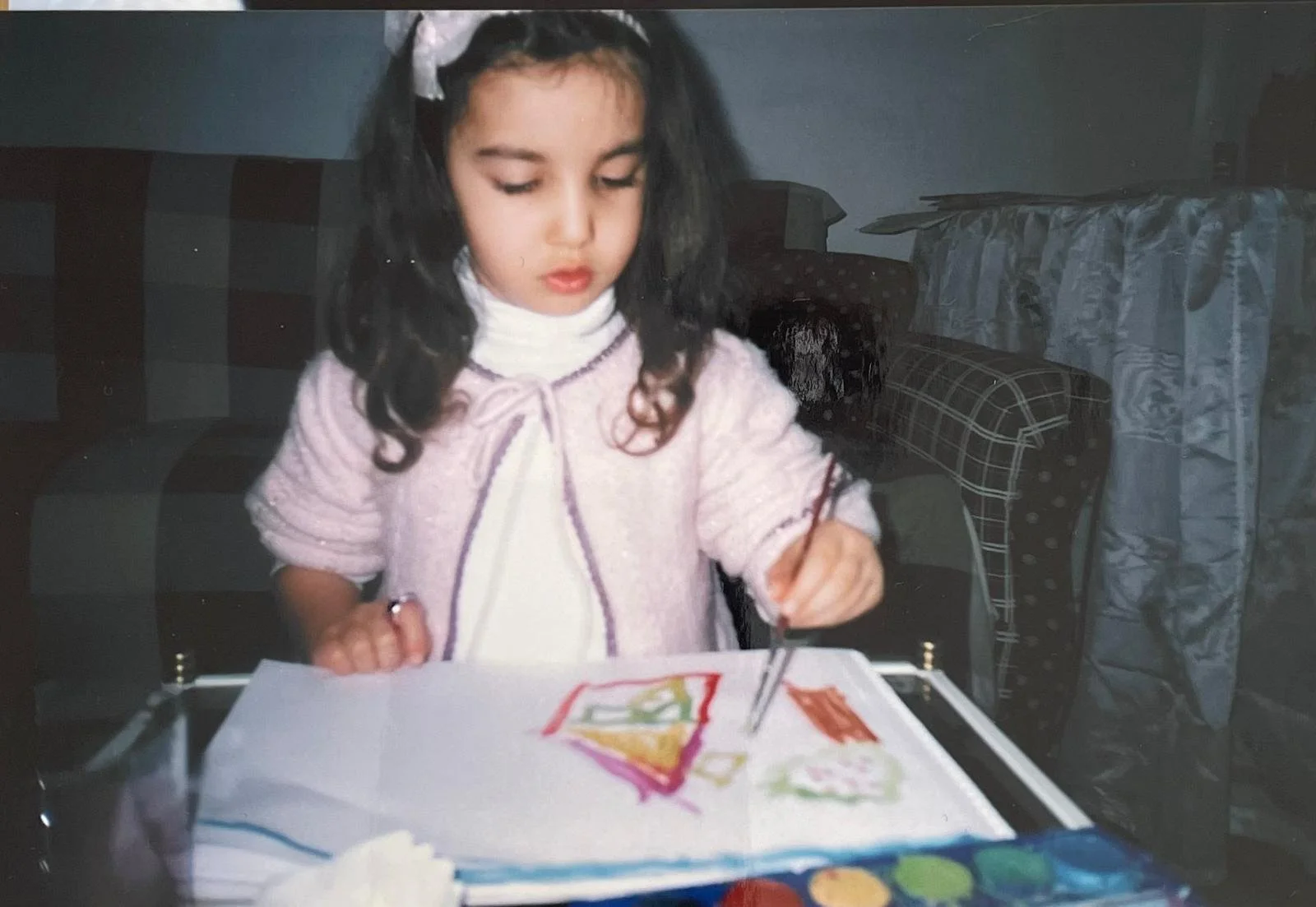
When I was growing up, there were some financial concerns. I couldn't try all the art forms I wanted to. I was so focused on securing my future that I didn't really allow myself to explore. I didn't properly pursue singing, even though I love it as a hobby. I played an instrument, but I never tried many others.
If I had been braver, I think I could have done it. And I'm sure you would be good at one of them.
I remember preparing for my solo exhibition and thinking, oh no, this isn't going to happen. I was scraping away parts of paintings, feeling incredibly stressed. But whenever I was stressed, I would paint. The very thing I was working towards was also what gave me relief.
When I look back at my younger self, even when I read my little diaries, I recognise such an artistic soul. So that’s why I would tell her that she needs art to cope with this world, whether as a hobby that she devotes a lot of time to or, preferably, as a professional career.
And if you're good at something, you'll become hardworking as a by-product. You don't necessarily have to force yourself to be hardworking when you're doing something you genuinely love. The motivation comes naturally.
And when you're creative and following a creative path, the work itself gives you the energy to keep going. It is a difficult path because it doesn't offer the security of a regular full-time job, but I really appreciate having support along the way as I try to make that little girl's dream come true.